





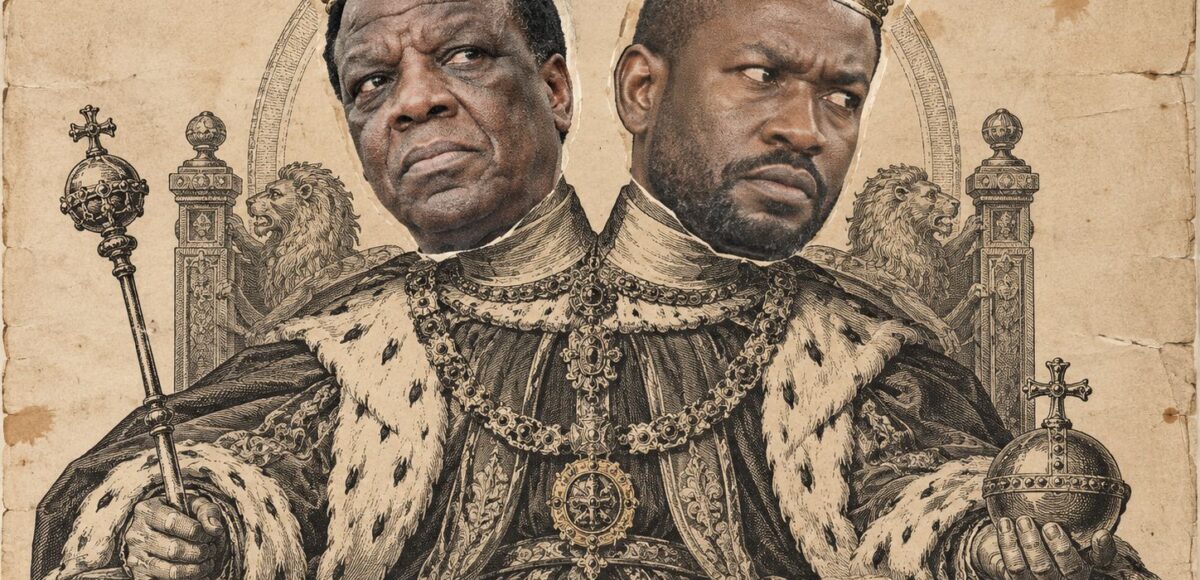
The possible emergence of Wycliffe Oparanya as the replacement for Oburu Oginga could introduce a new and potentially significant dynamic into the 2027 presidential contest. If the emerging alignment ultimately produces a William Ruto–Oparanya ticket facing a Kalonzo Musyoka–Edwin Sifuna ticket, the battle for the Luhya vote would become one of the most important fronts of the election.
The strategy is relatively simple: split Sifuna’s Luhya support by putting Oparanya directly in the contest for his political backyard. Sifuna would enter the race with an obvious advantage in Western Kenya. As a prominent Luhya politician and Nairobi Senator, he has the potential to present himself as one of the principal Luhya voices on a national ticket. A Kalonzo–Sifuna ticket would therefore be looking not only for the Kamba vote but also for a substantial share of the Luhya vote.
Oparanya changes that calculation. The former Kakamega governor has a deep political network in Western Kenya and, particularly, in Kakamega and the broader former Western Province. He would not need to defeat Sifuna outright. He would only need to take enough of Sifuna’s support to weaken the Kalonzo–Sifuna ticket’s numbers in the region.
That is where the Ruto–Oparanya strategy becomes interesting. Rather than treating Western Kenya as a bloc that must choose between Ruto and Sifuna, the strategy would turn the region into a direct contest between two of its own political heavyweights. Sifuna would be asking voters to back him as the Luhya representative, while Oparanya would be asking the same voters to back him as one of their own.
The objective would therefore be less about Oparanya winning Western Kenya outright and more about denying Sifuna a clean sweep. Even a divided Luhya vote could have significant consequences. If Sifuna takes 40% of the Luhya vote instead of 80%, for example, the difference could materially affect the national arithmetic. In a closely fought election, votes denied to one ticket are almost as important as votes gained by another.
There is also a political messaging advantage for President William Ruto. Oparanya would allow the President’s campaign to argue that the Luhya community does not belong to Sifuna or to the opposition ticket by default. It would give Ruto a senior Western Kenya politician capable of challenging Sifuna on his own turf.
For Sifuna, the challenge would be to prevent the contest from becoming a battle between Oparanya and Sifuna for the Luhya vote, while keeping the focus on the wider Kalonzo–Sifuna national ticket.
The bigger question, therefore, is not whether Oparanya can personally outpoll Sifuna across Western Kenya. It is whether Oparanya can eat sufficiently into Sifuna’s backyard to change the national mathematics. If the answer is yes, then Oparanya’s entry would be more than a running-mate announcement. It would be a deliberate attempt to split the Luhya vote, weaken the Kalonzo–Sifuna ticket and give Ruto a much stronger path through Western Kenya in 2027.
[/vc_column_text][/vc_column][/vc_row]

No comments
Sorry, the comment form is closed at this time.