



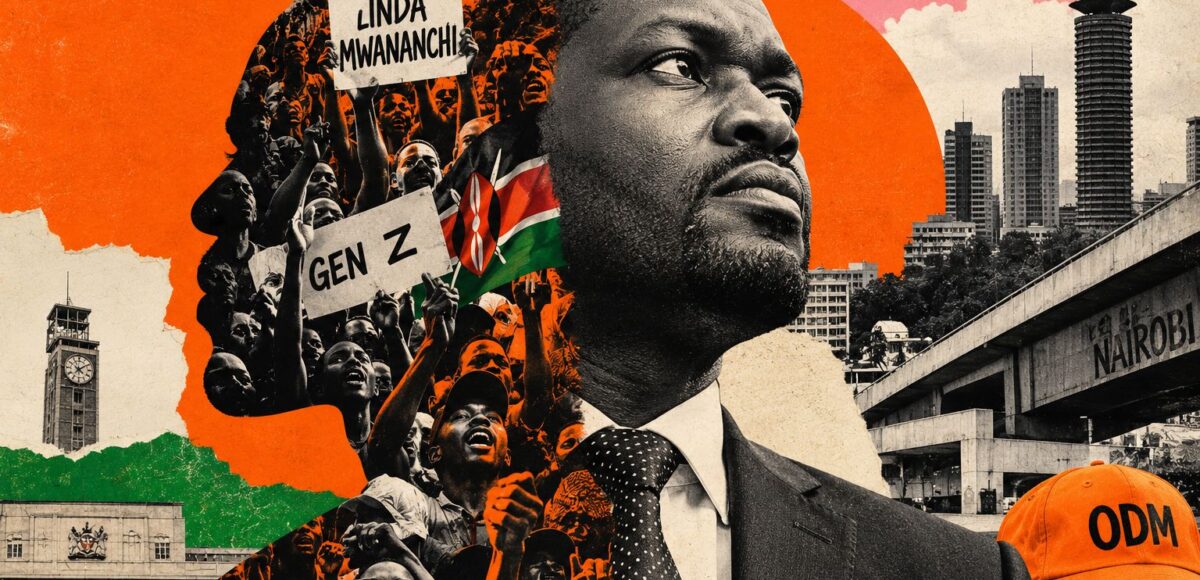
Edwin Watenya Sifuna is forty-four years old. He is a first-term Senator for Nairobi County, a lawyer, and immediate former Secretary General of the Orange Democratic Movement. He is not particularly wealthy. He holds no executive title, commands no government budget, and controls no state machinery. He has not formally declared a presidential candidacy. And yet, a year ago, no one imagined Sifuna would be a frontrunner in the 2027 presidential race. Today, TIFA polls place him at fifteen per cent national approval, behind only President Ruto, and ahead of both Kalonzo Musyoka and Fred Matiangi. The numbers defy conventional political logic. Which means the conventional explanation will not suffice.
To understand Sifuna’s moment, you must first understand what Kenya lost in October 2025.
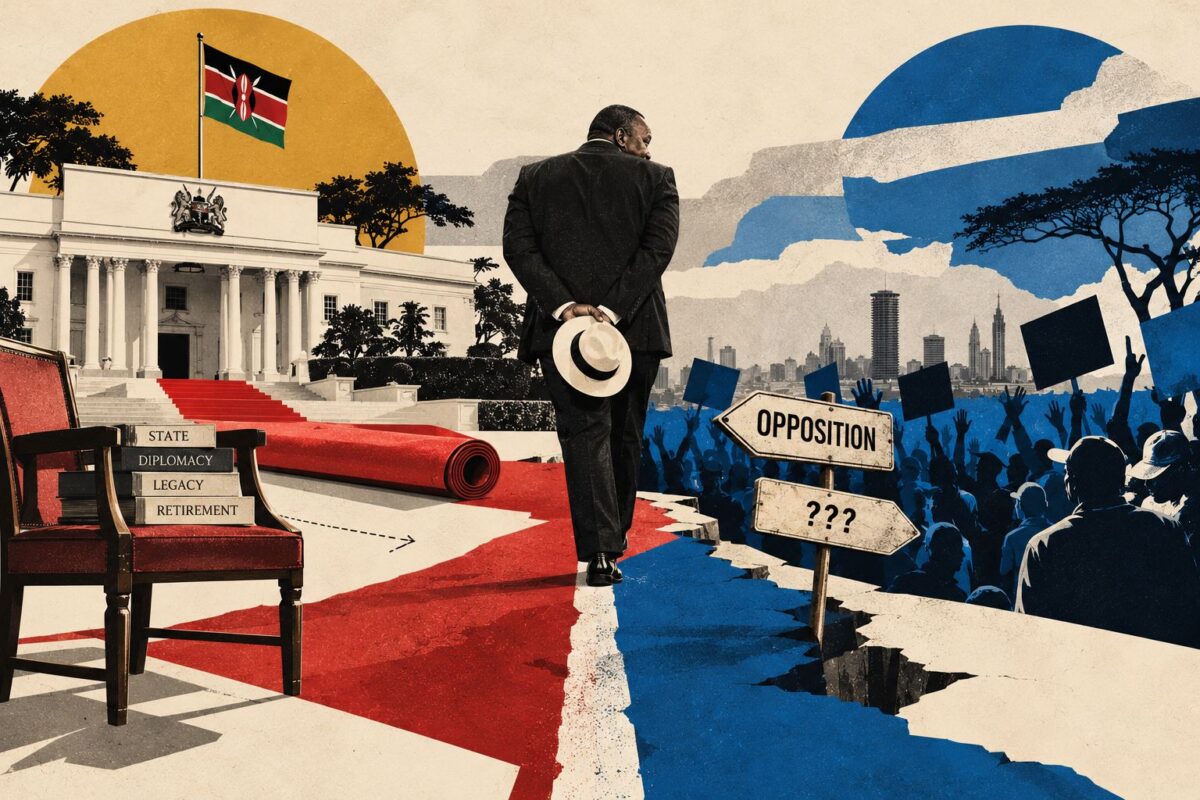
Raila Odinga did not merely leave a vacancy. He left a psychological rupture. For nearly three decades, Kenyan opposition politics had one organising principle, one man around whose resistance the discontented could gather, regardless of tribe, region, or generation. He was the fixed star by which the political firmament was navigated. When he died, what collapsed was not simply the opposition’s candidate list. What collapsed was the emotional architecture of Kenyan dissent. The anger did not go away. The grievances did not dissolve. The hunger for an alternative did not evaporate. It simply had nowhere credible to land.
Into that vacuum, the first person to plant a flag with genuine conviction was Edwin Sifuna.
He had earned the right to that moment quietly, through a series of choices that, in retrospect, look like preparation. When Raila’s ODM was drawn into Ruto’s broad-based government in 2024, Sifuna was the most prominent and most articulate voice of internal dissent. He insisted that ODM was not negotiating with Ruto for cabinet posts, and led a sizeable faction who opposed ODM taking its five ministries. When the Gen Z protests shook the country in June 2024 and more than a hundred people were killed or abducted by security forces, Sifuna actively sought to stop the police violence and earned goodwill among Kenya’s young voters in ways that no seasoned politician managed. While older political leaders calculated their proximity to power, Sifuna stood on the right side of a burning street.
This is the biography that matters. Not his law degree, not his Nairobi Senate seat, not his party title. What Gen Z saw in Sifuna was the rarest of things in Kenyan politics, a man who had something to lose by speaking, and spoke anyway. In a political culture that rewards accommodation and punishes independence, his refusal to be absorbed read not as obstinacy but as integrity. And integrity, in a season of profound cynicism, is the most powerful political currency there is.
The historical parallel is instructive. In 1992, when Kenya reluctantly opened the democratic space after years of single-party rule, the figures who captured the public imagination were not the most experienced or the most resourced. They were the ones who had paid a personal price for their convictions. Oginga Odinga, at eighty, became the symbol of a generation’s defiance not because he was capable of governing, his time for that had passed, but because he had earned the trust of the dispossessed through decades of refusal to conform. The Luhya specifically have a deep memory of what authentic political courage looks like. Masinde Muliro co-founded KADU at independence to protect smaller communities from the centralizing ambitions of the powerful. Kijana Wamalwa spoke for the Bukusu and the broader community with a voice that could silence stadiums and fill hearts. These were not merely politicians. They were symbols of a community’s dignity.
Luhya elders from the region have begun symbolically endorsing Sifuna as the Western region’s political kingpin, handing him the mantle of regional leadership as he pursues his 2027 ambitions. It is a remarkable development, and a revealing one. Here is a man who represents Nairobi, not a Luhya constituency. He has no inherited political dynasty, no father’s seat to occupy, no patronage network built over decades. Yet the community is reaching toward him as it has not reached toward Mudavadi in years, and has never reached toward Wetang’ula at all. The reason is not calculation. It is recognition. They see in Sifuna the echo of leaders who stood for something, and they are tired of leaders who simply stand.
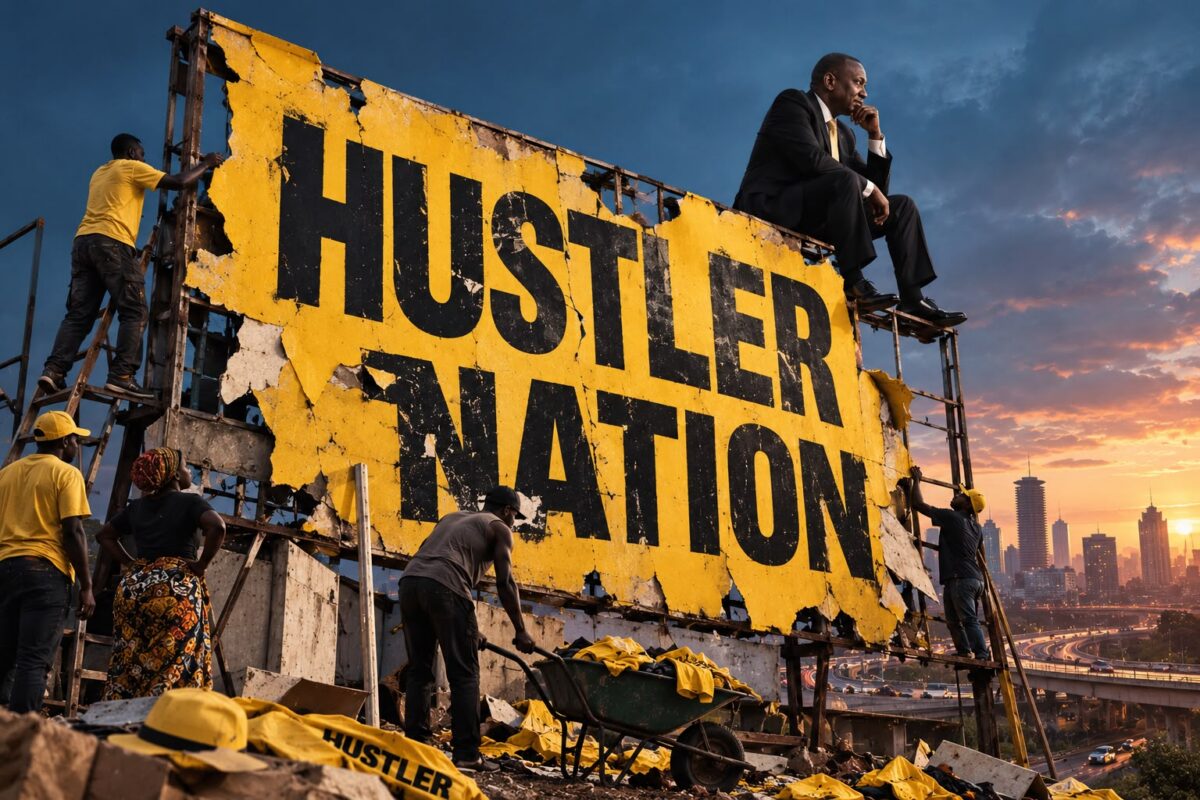
This is precisely what William Ruto’s strategists understand and fear. Ruto had counted on a fractured and leaderless opposition following the cabinet co-options. Instead, he faces a highly articulate opponent who intimately understands the mechanics of urban mobilisation. More dangerously, Sifuna is an opponent whose power does not reside in money or machinery, two things the incumbent can outspend. It resides in symbolism. And symbolism, as Ruto himself demonstrated in 2022 when he packaged himself as the hustler nation’s embodiment, is the one political resource that cannot be purchased or neutralised.
The question that hangs over Sifuna’s ascent is the same question that history asks of every symbol who becomes a candidate: can the symbol survive the campaign? Because the moment a man formally declares for the presidency, he is no longer only a symbol. He becomes a target, of scrutiny, of opposition research, of the state’s considerable capacity for disruption.
His rallies have already been violently disrupted by gangs of young thugs. He has been warned, implicitly and explicitly, that the machinery of the state does not intend to make his path comfortable.
There is also the internal opposition question. TIFA Research has raised concerns that the presidential ambitions of Siaya Governor James Orengo, coming amid Sifuna’s rising popularity, could trigger internal tensions within the Linda Mwananchi faction. The opposition’s oldest affliction, its inability to coalesce around a single candidate without fracturing, has not been cured by Raila’s death. It has merely been postponed.
And yet. The TIFA numbers keep moving in one direction. Sifuna has overtaken both Musyoka and Matiangi in presidential popularity within the opposition camp, with political players now viewing him as the opposition’s compromise candidate. This is an extraordinary position to occupy.
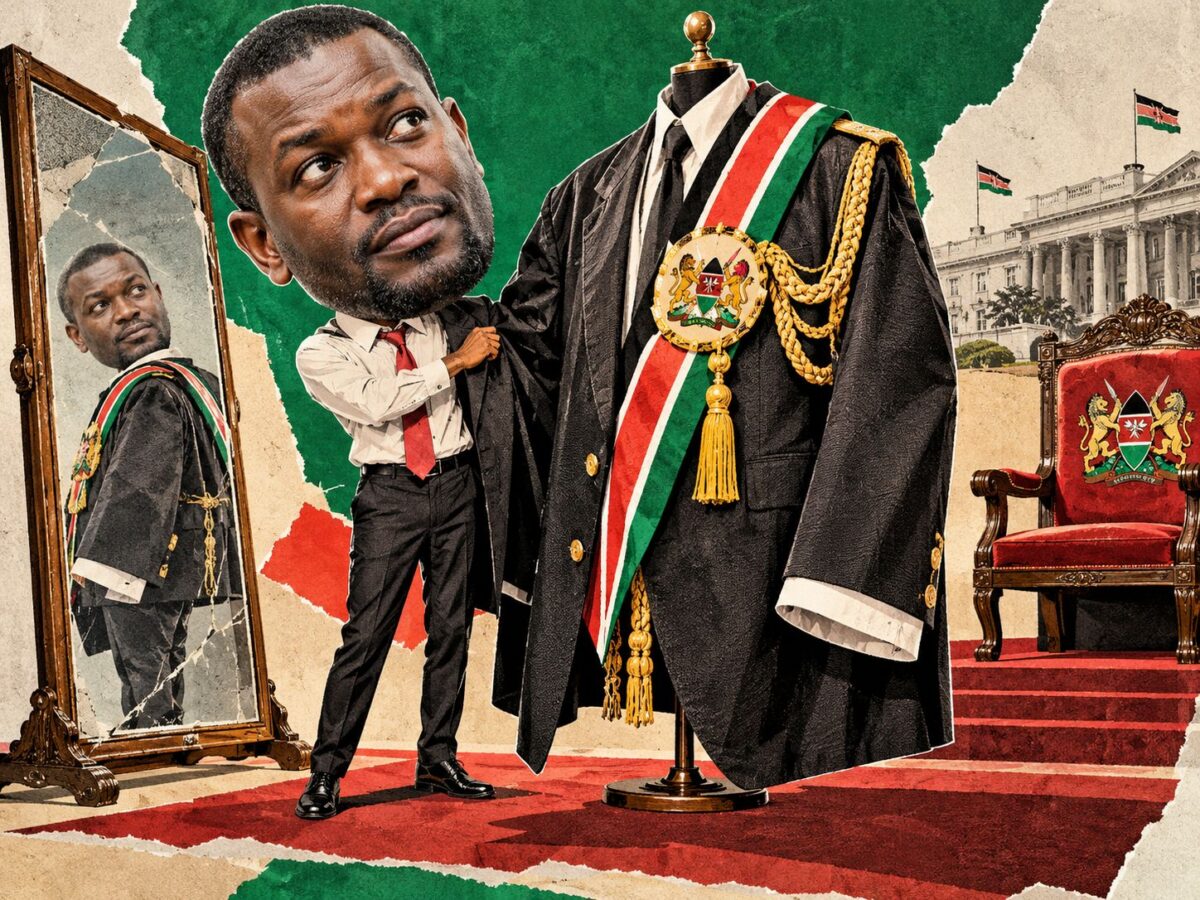
History offers one final caution. Kenya has a habit of falling in love with symbols and then punishing them for being human. Raila himself was the symbol of liberation for millions, and lost four presidential elections partly because symbols, when they begin negotiating and compromising and making deals, inevitably disappoint the faithful. The question is not whether Edwin Sifuna is the right man. The question is whether Kenya, in its current hunger, is looking for the right man at all, or simply for the right mirror.
For now, the mirror is working perfectly. The image it reflects is what a generation has been waiting to see: young, unbought, and unafraid.
Whether the man behind it can sustain that reflection all the way to August 2027 is the most interesting question in Kenyan politics today.
[/vc_column_text][/vc_column][/vc_row]

No comments