





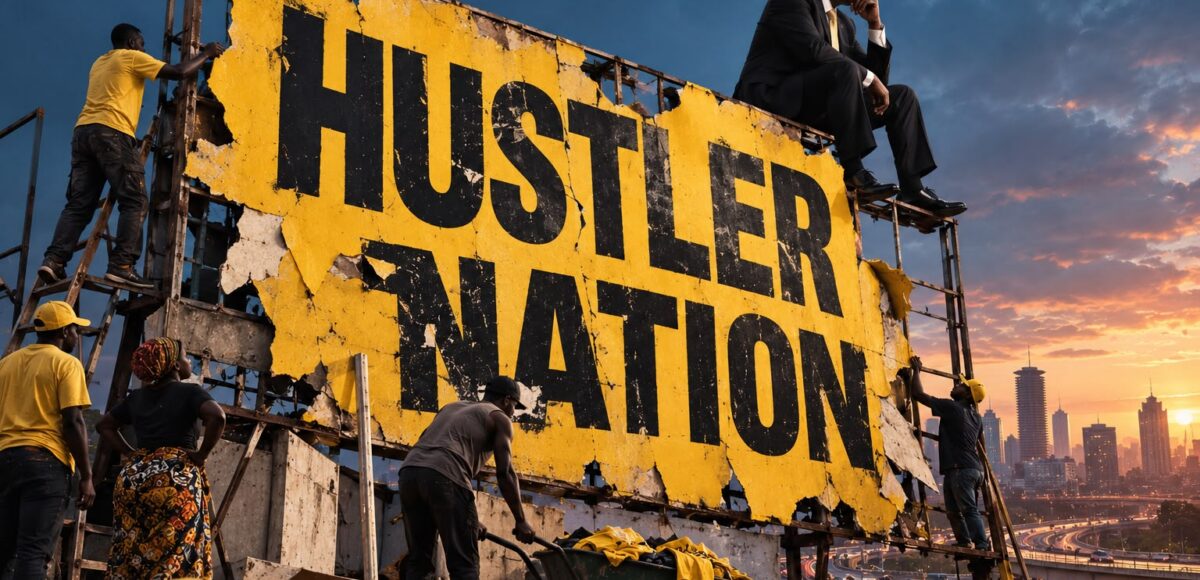
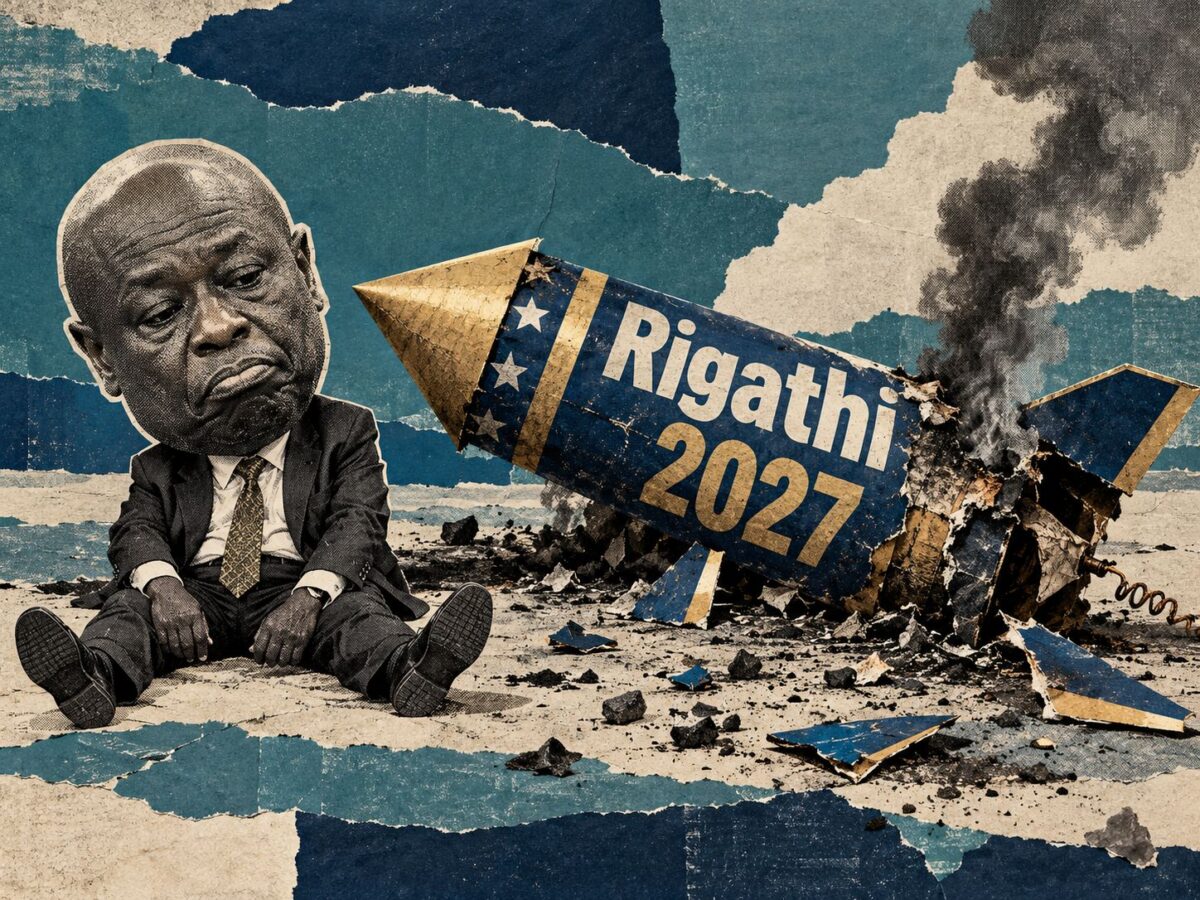
Some political ideas die because they lose elections. The Hustler Nation suffered a much stranger fate. It won, and victory became the beginning of its death.
After William Ruto’s victory in 2022, the Hustler Nation died a violently painful and uncomfortable death. What many of us thought would catapult Ruto further after his victory instead began to drag him down. The constituency assembled around this new political identity did not immediately feel that it had won anything. The language disappeared almost as quickly as the yellow shirts. Today, almost nobody speaks seriously about the Hustler Nation, and even monuments erected in its name, most notably the Hustler Fund, can feel like reminders of an idea that failed to take hold. But perhaps we killed the idea too quickly.
To ask whether it can be revived, we have to remember what it was supposed to be. Mutahi Ngunyi’s original Hustler versus Dynasty thesis was never simply rich versus poor. It was a theory of how power and wealth reproduce themselves in Kenya. In Ngunyi’s telling, Moi created Gideon in his own image, a political heir born into wealth, networks and pedigree. Joshua Kulei, by contrast, emerged from the rougher world of self-made accumulation, rising from prison warder to Moi’s inner circle, and then helping create a younger political generation around him. Njenga Karume, another founding figure in this mythology, began as a charcoal dealer. Their inheritance was not a famous surname. It was method.
That distinction mattered. Dynasties inherited political bloodlines. Hustlers manufactured their own. The dynasty successor was born, groomed and prepared. The hustler emerged through competition, patronage, appetite and survival. On one side stood the pedigreed: cultivated, protected by family names and generational networks. On the other stood the hustlers: brash, unorthodox, occasionally vulgar, hungry, self-made men and women who did not know their fathers’ names, at least not in the political sense that mattered.
Ruto was the perfect political specimen for that argument. His biography was the message. He did not inherit a political kingdom. He accumulated power the hard way, sometimes elegantly, sometimes brutally, always from the outside in. By 2022, the argument had become bigger than Ruto himself. If a man without a political father could become President, perhaps Kenya was not condemned forever to rotate leadership between familiar families. Hustler versus Dynasty worked because it converted one man’s ambition into millions of people’s aspirations.
But here is the uncomfortable question: was the Hustler actually just a Kikuyu with make-up?
At the risk of offending everybody, the stereotype fits rather neatly. What is a hustler but somebody constantly looking for the next opportunity, running several things at once, accumulating slowly, borrowing, investing, buying land, opening businesses and treating poverty as something to escape? As a Kikuyu myself, I cannot pretend the character is completely unfamiliar.
Perhaps that is why the Hustler idea found such fertile ground in Mt Kenya. The region did not simply hear a class message. It recognised an economic character. The trader with several side businesses, the landlord building a few rooms behind his house, the woman selling vegetables while saving through a chama. They already knew the hustler.
But the Hustler was never exclusively Kikuyu. That was the political trick. Ruto took a character that Mt Kenya recognised particularly easily and gave it a national identity. Elsewhere the occupation, language and circumstances changed, but the instinct was familiar: work, accumulate, get ahead, refuse to remain where you started. Hustler Nation found a way of speaking across tribe without pretending tribe had disappeared. Ethnicity asks where you come from. Hustler politics asked where you were trying to go.
And therein lay both its genius and its eventual problem. The Hustler Nation was never really about celebrating poverty. Nobody dreams of hustling forever. Hustling only makes sense if it leads somewhere. The informal becomes formal. Rent eventually becomes ownership. Subsistence gives way to accumulation. The person standing outside the room eventually gets a chair inside it. The promise was movement.
Yet after the election, the hustler somehow became an administrative category. The Hustler Fund became the most obvious symbol of this transition. Whatever its merits as a credit programme, a loan could never carry the political weight that Hustler Nation once carried. The promise had always been larger than access to credit. It was about opening up a political and economic system that had long felt easier to enter if you were already close to power, capital or the right surname.
This is where, at the risk of sounding like a Ruto apologist, which I am, we may have missed something.
Look again at Ruto’s presidential agenda through the old Hustler lens. Affordable housing is an attempt to turn income into ownership. Universal healthcare protects fragile household gains from being wiped out by illness. Agricultural reform, small-business finance and digital work all try, in different ways, to widen the routes through which ordinary people can earn, accumulate and move.
Seen that way, these programmes begin to look less random. They may be incomplete, uneven or badly explained, but the old Hustler instinct is visible inside them. The interesting question is whether Ruto himself still sees them that way.
That is where revival becomes possible.
There is no point resurrecting the wheelbarrow or pretending Ruto is still outside the gates of power. He is now the man inside them. The political project has to mature with him.
In 2022, Hustler Nation proved something important: a man without the right surname could become President. The next test is much more difficult. Can people without inherited capital own homes, build durable businesses, protect what they have earned, move into new industries and give their children a better starting point than the one they had?
That takes us back to Ngunyi’s original argument. The problem with dynasties was never simply that some people were wealthy. It was that wealth and power reproduced themselves. Those already inside had the means to remain inside. Everyone else had to hustle for an opening.
Ruto broke that logic politically when he became President. The unfinished question is whether his presidency can break it economically.
If it can, then Hustler Nation was never just a clever succession vehicle. It was the beginning of something much bigger. If it cannot, then perhaps all we witnessed in 2022 was one exceptionally successful hustler making it to the top.
Ruto has already proved that a hustler can become President. The harder test is whether, under a hustler President, hustling can finally lead somewhere.

No comments