



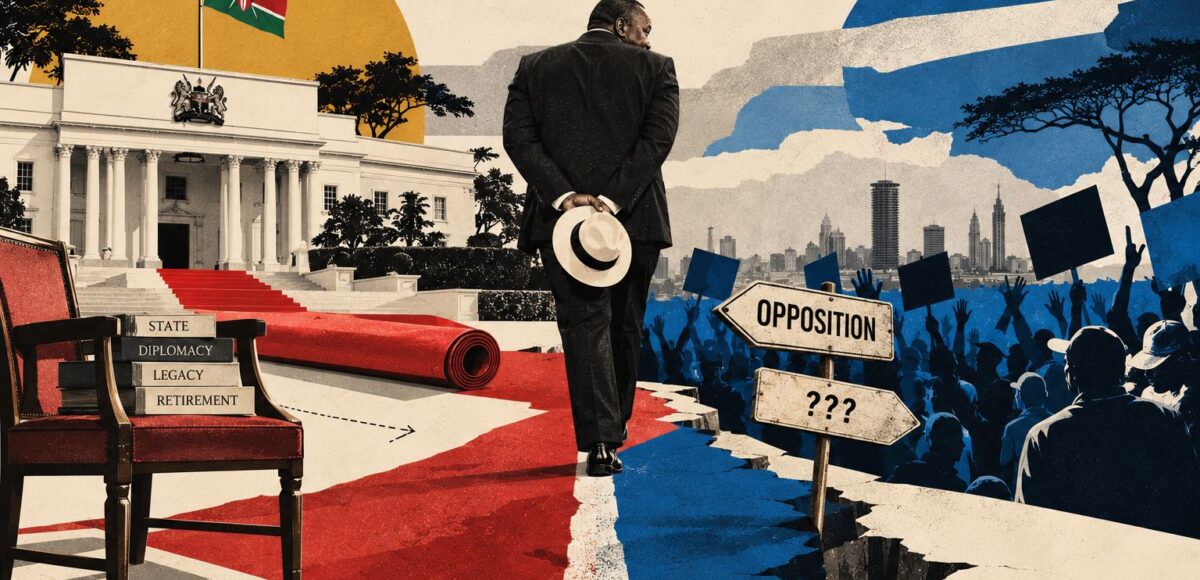
The ruling comes amid growing political tensions between Uhuru and his successor, President William Ruto. Government allies have accused the former president of sponsoring opposition activities, allegations that have placed his continued political involvement under intense scrutiny. Uhuru, meanwhile, has responded to the “sponsor” label with apparent sarcasm, turning the accusation into a political talking point.
The latest judgment follows a separate High Court decision delivered on September 14, which upheld restrictions on retired presidents holding formal political party leadership positions beyond six months after leaving office. Uhuru had indicated he would facilitate a handover of Jubilee Party leadership following that ruling.
However, Justice Bahati Mwamuye’s September 21 decision declared Sections 4(1), 4(2) and 4(3) of the Act unconstitutional, finding that the restrictions violated constitutional protections, including political participation and freedom of association. The court’s reasoning was that leaving State House ends presidential executive authority, not the individual’s constitutional rights as a citizen.
The legal position has therefore become more complex. The two High Court decisions differ on the extent to which retired presidents can participate in active politics and hold formal party positions. The precise implications for Uhuru’s Jubilee leadership will depend on the scope and legal effect of the latest orders, including how the conflicting decisions are addressed.
The political argument, however, goes beyond the question of party office.
Uhuru’s continued engagement with opposition leaders has prompted accusations that he is using his influence to frustrate President Ruto’s administration. Supporters of the former president argue that political participation is a constitutional right and that opposition activity is a normal feature of democracy.
But the “sponsor” label raises a broader question about the informal power former presidents retain after leaving office. A former head of state may no longer control government machinery, but still command political networks, resources, relationships and public attention.
That influence can be used to mediate political disputes or support a political cause. It can also deepen tensions with a sitting president, particularly when the former leader is perceived to be helping organize the opposition.
The challenge is distinguishing legitimate political participation from conduct that undermines democratic institutions. The court’s ruling addresses the former president’s constitutional rights; it does not, by itself, settle every political dispute surrounding how those rights are exercised.
How should former presidents behave?
There is no single international model for presidential retirement.
In the United States, former presidents have remained politically active, campaigning for candidates and participating in party politics. Barack Obama, for example, has continued to campaign for Democratic candidates after leaving office. Such activity illustrates that retirement from the presidency does not necessarily require political silence.
Other former leaders have chosen a more restrained public role, focusing on diplomacy, humanitarian work or national reconciliation. Nelson Mandela, after leaving South Africa’s presidency, remained influential in public life while stepping back from day-to-day party leadership.
These examples reflect different political traditions. Kenya’s own circumstances are shaped by highly personalized political alliances and the enduring influence of former presidents. The relationship between a retired president and a sitting president therefore requires both constitutional clarity and political restraint.
A former president does not surrender his citizenship or political rights upon leaving State House. But retirement from the presidency must mean more than relinquishing the title. It must also mean respecting the authority of the office and the constitutional mandate of the person who occupies it. Uhuru Kenyatta, like any retired president, is entitled to participate in public life and express political views. That freedom, however, should not become a license to interfere with, destabilize or undermine the sitting president’s ability to govern.
A former president may disagree with the government, but should not seek to govern from the shadows. The country cannot have two competing centers of presidential authority. The former must respect the office, the sitting president must answer for the exercise of it. That is the balance required by constitutional democracy, and the standard expected of those who have already held the nation’s highest office.
[/vc_column_text][/vc_column][/vc_row]


No comments