





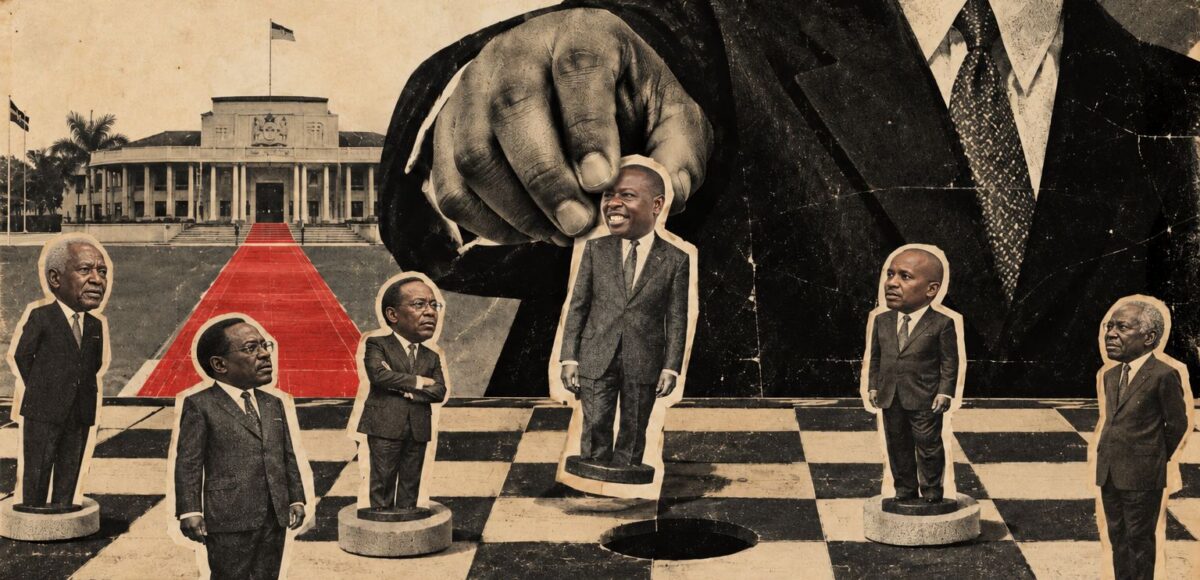
To understand this logic, you must first understand the mathematics of the deputy’s appointment. In Kenya’s political architecture, the running mate selection has never been primarily about governance competence or national stature. It has been about the arithmetic of coalition-building and, more crucially, about the careful management of threat. A president does not want a deputy who is too powerful, too popular, or too independent. He wants a deputy who is grateful, loyal, and, above all, not in a position to overshadow the principal.
Daniel arap Moi understood this with the precision of a master craftsman, and no episode illustrates it better than the appointment of Josephat Karanja in 1988. When Moi dropped Mwai Kibaki from the vice presidency that year, powerful forces around the president were arrayed against the then-VP, and Kibaki was replaced by a surprise choice, newcomer Dr Josephat Karanja. Karanja was a Princeton-educated academic, the former Vice Chancellor of the University of Nairobi, a man of considerable intellectual distinction and zero political base. He had no community he could mobilise against Moi, no independent following that could make demands of the presidency. He was, in short, the perfect instrument, brilliant enough to be useful, rootless enough to be controlled.
Karanja lasted barely fourteen months in the office. Within that period, Parliament, the same Parliament that had applauded his elevation, rose against him and forced his resignation. He had become, in the eyes of Moi’s inner circle, too eager to assert himself, too quick to imagine that the office conferred genuine authority. The lesson was administered swiftly and without sentiment.
Into the vacancy stepped George Saitoti, and here the Moi formula reached its most refined expression. Moi had appointed Saitoti to Parliament through a nomination slot, then brought him into cabinet as Minister of Finance. In 1989, he elevated him to the vice presidency. Saitoti was of mixed Maasai and Kikuyu descent, a dual ancestry that was seen as a political disadvantage, he had no single ethnic constituency he could credibly claim to deliver. For Moi, this was not a disadvantage. It was the entire point. Saitoti turned out to be Kenya’s longest-serving Vice President, holding the position between 1989 and 1998, and again briefly from 1999 to 2002. He survived because he understood the rules: serve loyally, threaten nobody, and wait.
The Moi formula, pick the unexpectedly obscure, the ethnically ambiguous, the personally indebted — was retired when multiparty democracy arrived and coalition politics changed the calculus of running mate selection. For a decade and a half, the pressure to deliver specific communities made presidential candidates reach for figures of regional stature, Wamalwa, Awori, Musyoka, Ruto himself.
And then, in May 2022, William Ruto reached into the Moi playbook and extracted it, dusted it off, and deployed it with extraordinary effect.
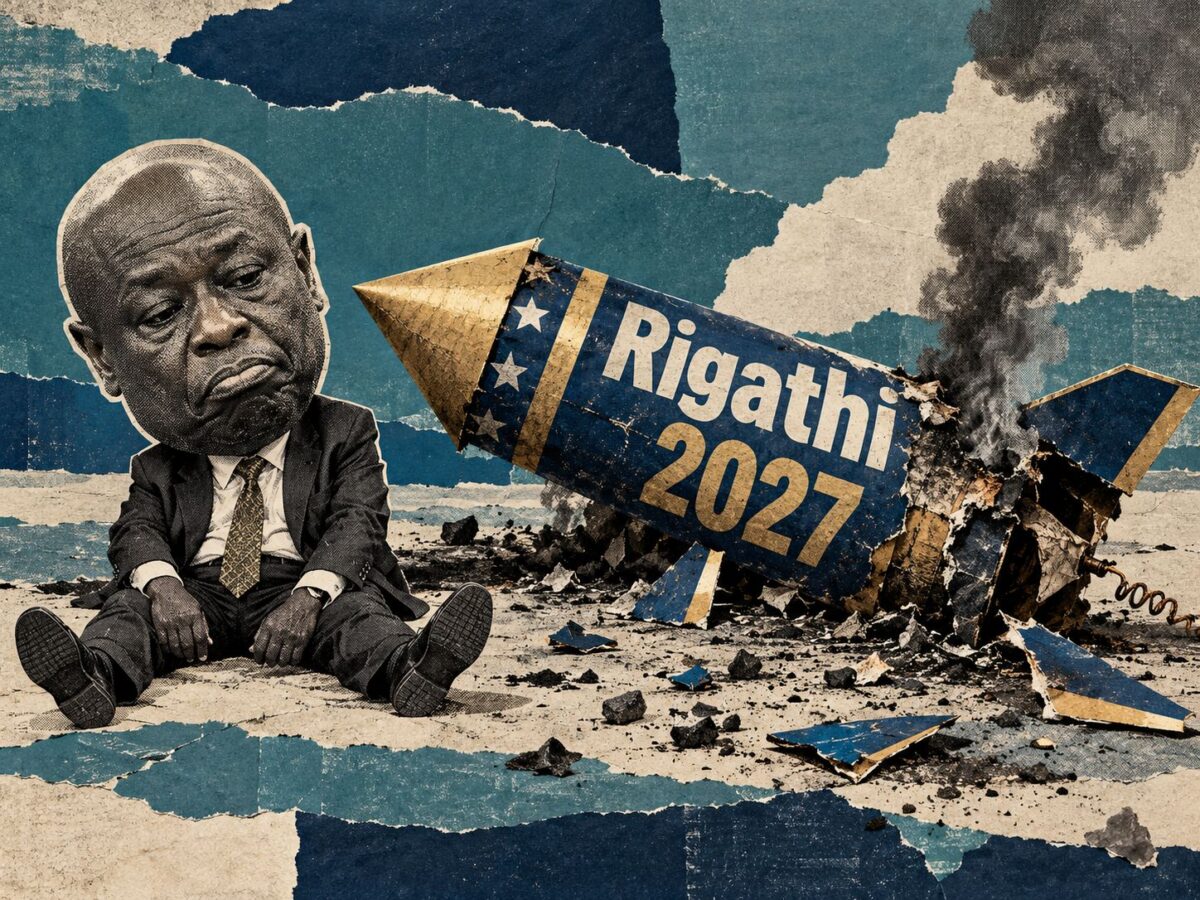
Rigathi Gachagua was a first-term MP for Mathira with zero national profile when Ruto handpicked him as running mate, catapulting him over the bids of seemingly more suitable candidates. The country, which had spent months debating whether Kithure Kindiki or Ndindi Nyoro would get the slot, was blindsided. Gachagua was not an obvious choice by any conventional measurement of political stature.
He was loud, combative, and deeply loyal, a man who had mortgaged everything to Ruto’s campaign and had nowhere else to go. He directed vicious attacks on Uhuru Kenyatta, whom he once served as a personal assistant, helping consolidate the Mt Kenya vote for Ruto. He was the attack dog that made Ruto look reasonable. He was useful, he was controllable, and he was, by every calculation of his patron, safely dependent.
The calculation was, of course, catastrophic. President Ruto and his allies had miscalculated big time in assuming that Gachagua would disappear into oblivion after his impeachment. The Frankenstein that President Ruto created became his worst nightmare. The obscure MP from Mathira, whom most Kenyans had never heard of before May 2022, had been transformed by two years in the second office into a household name, a regional champion, and a formidable political force. The deputy presidency, it turns out, is the finest political finishing school in the republic. No one, however raw when they enter, leaves it as they arrived.
This is the permanent lesson that Kenyan history has been trying to teach its presidents, and that its presidents have consistently refused to learn.
Because the logic of the dark horse appointment contains within it the seed of its own undoing. You select the obscure precisely because they are obscure, because they owe you everything and threaten you nothing. But the office itself changes them. The motorcades, the State functions, the national platform, the daily media presence, the communities that begin to project their hopes onto whoever holds the title, all of this transforms a political unknown into something the president never intended to create: a figure with a following of their own.
Saitoti, the rootless mathematician from Kajiado, became a Kajiado political dynasty. Gachagua, the first-term backbencher from Mathira, became the undisputed voice of Mt Kenya’s grievance politics. The office makes the man that the man was never meant to become.
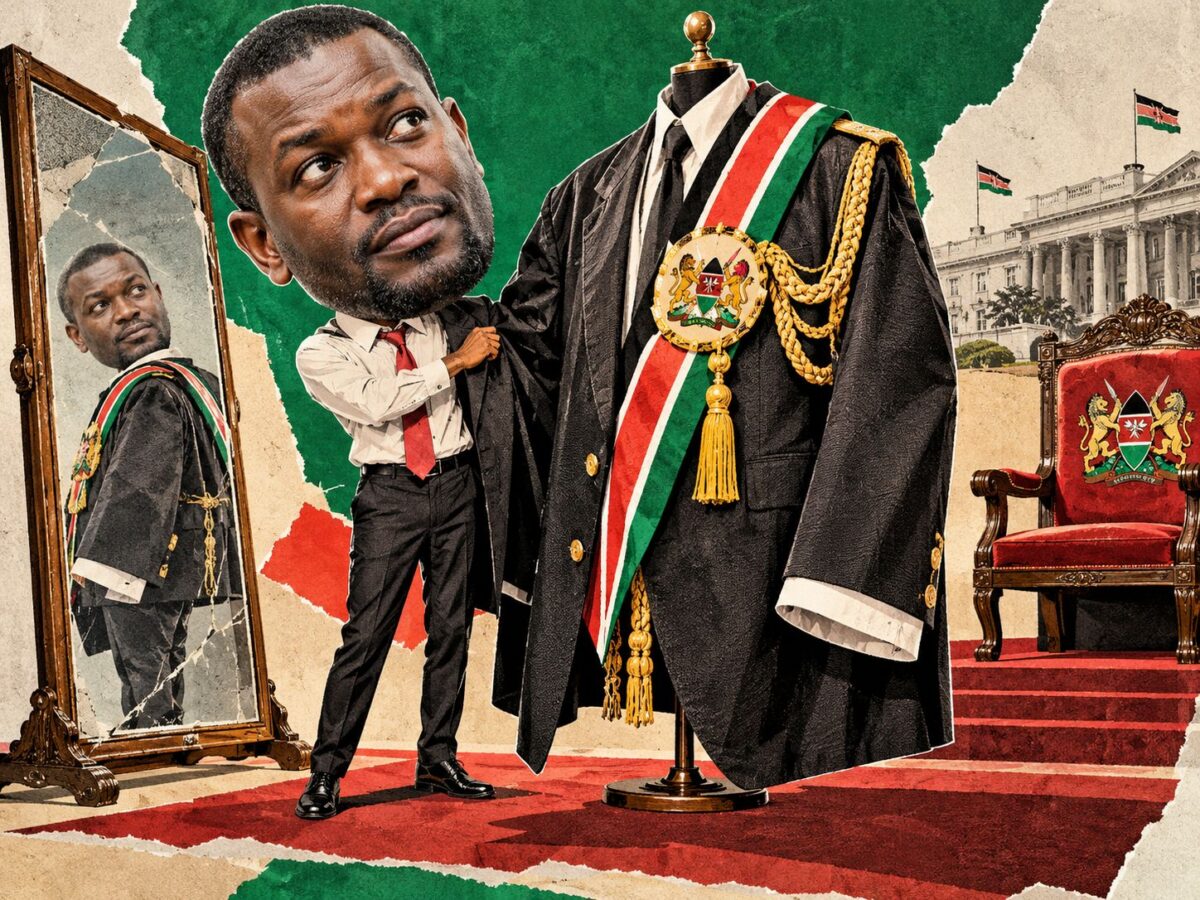
Heading into 2027, the same logic is already visibly at work. The opposition’s running mate calculations are dominated by the names of the expected and the established, governors, senators, figures with existing profiles. Every pundit is studying the obvious candidates. Every analyst is mapping the coalition arithmetic of the familiar.
History suggests they are looking in the wrong direction. The 2027 running mate, on whichever side of the ballot they appear, is almost certainly someone whose name, if mentioned in a baraza today, would produce blank stares and polite confusion. They exist somewhere in the political ecosystem right now, unobserved, unanalysed, performing the quiet loyalties that presidential candidates notice and the public does not.
And five years from now, we will be writing the same sentence we have written before: no one saw them coming.
[/vc_column_text][/vc_column][/vc_row]


No comments
Sorry, the comment form is closed at this time.