



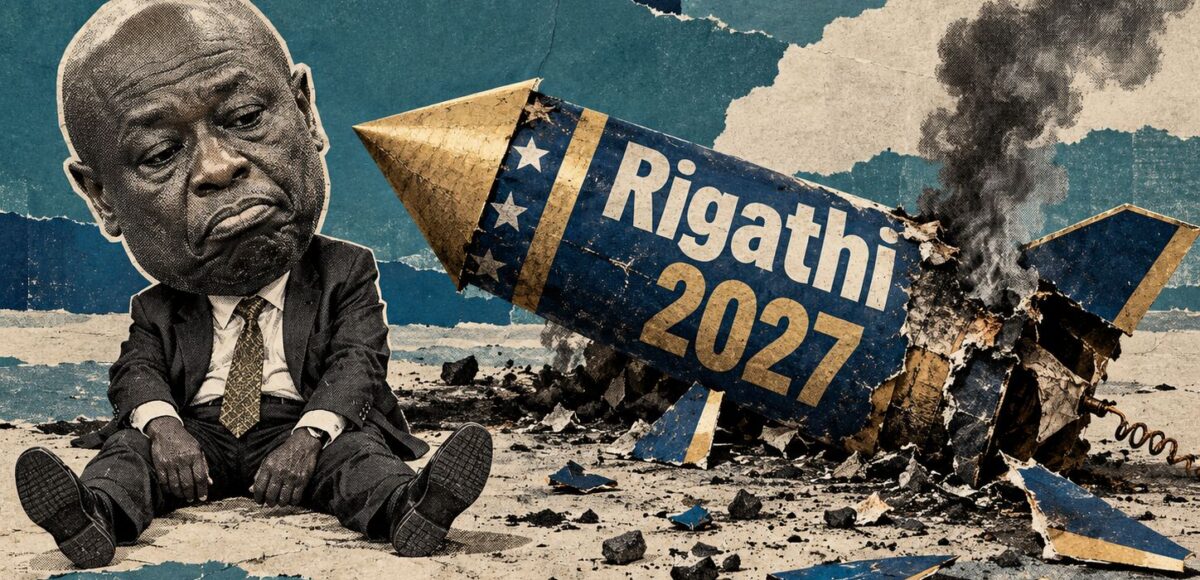
Most politicians spend an election trying to peak at the right time. Rigathi may have peaked before the race properly began. That does not mean he is finished. It means he has a much stranger problem. What does Rigathi tell Kenya in October that he has not already told it by September?
We know Rigathi. We know why he hates Ruto. We know what happened during the impeachment. We know his theory of Mt Kenya’s betrayal. We know DCP. We know the listening tours. We know Wamunyoro. We know the presidential ambition. We know who betrayed whom, who lied to whom, what was promised in 2022 and what allegedly went wrong afterwards. We even now know roughly what the first hundred days of a Rigathi government would look like.
There is very little Rigathi left to discover.
This is quite an achievement when you consider how recently the current version of him was invented. Since his impeachment, Rigathi’s political evolution has been unnaturally compressed.
Normally, a politician stretches reinventions over several elections. Raila Odinga built and rebuilt his political identity across decades. William Ruto spent years moving from Rift Valley lieutenant, to kingmaker, to deputy president, to outsider-within-government, before finally arriving at State House. Rigathi appears to have attempted the entire syllabus before lunch.
And perhaps that is the problem.
The more interesting proposition is not that Rigathi has peaked. Politics is too volatile to make such a confident prediction eleven months before an election. It is that he may have spent his political story too quickly.
His first task after impeachment was obvious: survive. His second was harder: persuade Mt Kenya that what had happened to Rigathi Gachagua had also happened to them. On this, he has been remarkably successful. DCP has become the strongest identifiable party vehicle in Central. In Infotrak’s June survey, 33 per cent of Central respondents said DCP was the party they felt closest to, compared with 9 per cent for UDA. So the Mountain has listened.
But politics becomes more complicated precisely when people start listening.
Eventually another rally in Nyeri tells Nyeri nothing it does not already know. Another explanation of how Ruto betrayed him persuades nobody who has not already been persuaded. There are diminishing returns to grievance, particularly when the grievance has been repeated ad naseum. And the numbers suggest Rigathi may already be approaching that point.
The same Infotrak poll that gave DCP 33 per cent party preference in Central gave Rigathi only 12 per cent when respondents there were asked whom they would vote for as president. Fred Matiang’i was at 19 per cent. Even among DCP supporters, only 24 per cent chose Rigathi for president, with Kalonzo Musyoka and Matiang’i each attracting 20 per cent.
That is a rather awkward set of numbers. Rigathi appears to have built a political vehicle that, at least for now, is considerably more attractive than its driver.
This is where the question of political runway becomes interesting, because Rigathi’s rivals have the opposite problem.
Take Kalonzo Musyoka. He has been cautious, patient and sometimes slow to act. But that has also allowed him to keep his options open. He wastes extraordinary amounts of time. Yet politically, time has not exhausted him. There is always another Kalonzo decision still available because he has spent most of his career refusing to make one.
Matiang’i is different again. His campaign resembles a slow puncture, but importantly, the tyre still contains air. He has not defined himself completely. His potential coalition remains theoretical, his message is underdeveloped. His political personality is still sufficiently mysterious that different groups can project different possibilities onto him.
That is a weakness today. It is also unused political inventory.
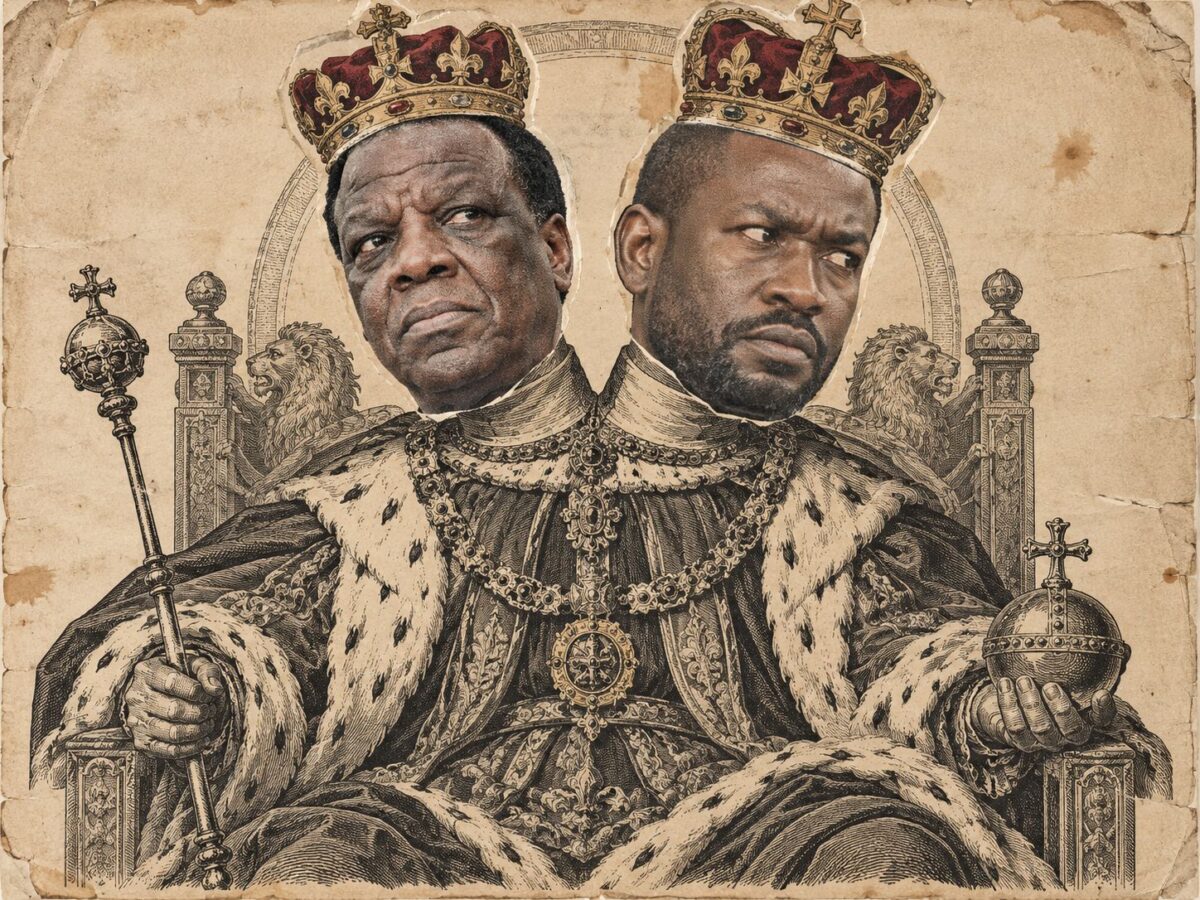
Rigathi has the opposite problem. Almost nothing about him remains unopened. That is the danger in the word kingmaker. It sounds flattering. For a man who says he wants to be president, it is also a demotion. The kingmaker matters because somebody else gets to be king.
Rigathi clearly knows this. Last month he insisted: “I am not a kingmaker; I am KING.” It was a revealingly defensive sentence. People who are comfortably king rarely need to issue clarifications.
Then, only days later, he was talking about deputising Edwin Sifuna if the opposition arithmetic showed Sifuna was the stronger candidate. There is nothing foolish about that calculation. It may even be the sensible thing to do. But it tells us where Rigathi’s leverage is beginning to sit. His most persuasive claim may no longer be that Kenya wants him. It may be that somebody who wants Kenya will need him.
Rigathi may now be approaching the limit of what his current strategy can give him. A stronger grip on Mt Kenya makes him more valuable to an opposition ticket, but also makes it harder to escape the role of regional broker. To grow nationally, he would have to become less exclusively the spokesman of Mt Kenya grievance, which risks weakening the very identity that made him powerful in the first place. From here, every move costs him something.
[/vc_column_text][/vc_column][/vc_row]

No comments