





By Patrick Iraki
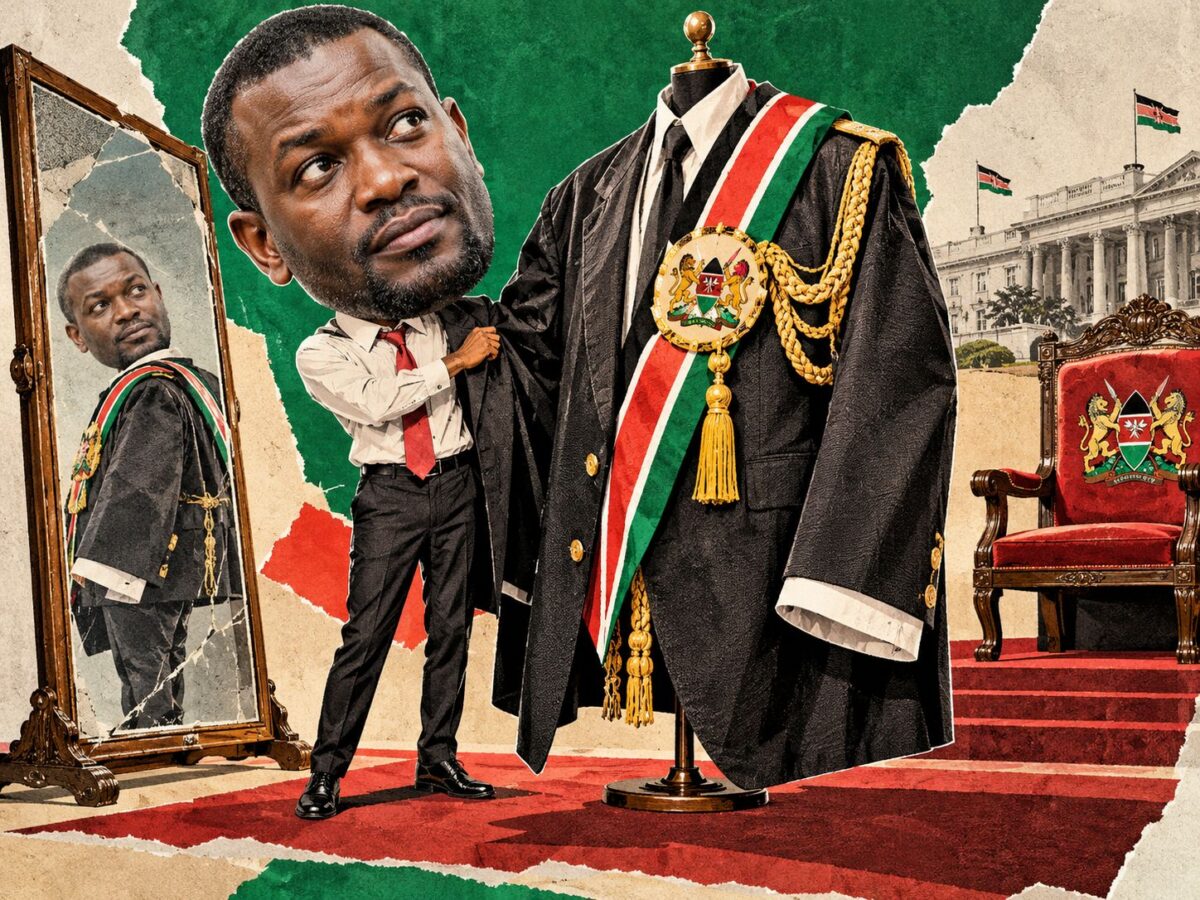
The mantle that Raila Odinga wrested from Jaramogi’s anointed successor has, by the cruel arithmetic of mortality, found its way back to the Mulembe nation but the young man upon whose shoulders it now rests must understand that a mantle is not a throne.
There is, in the oral traditions of the peoples who inhabit the western highlands of this republic, a recurring motif: that which is taken by cunning shall be reclaimed by fate. The elders who sit beneath the mukumu trees of Kakamega will tell you, if you have the patience to listen, that a stolen blessing does not remain stolen forever. It merely waits sometimes across generations for the proper hour of its restitution.
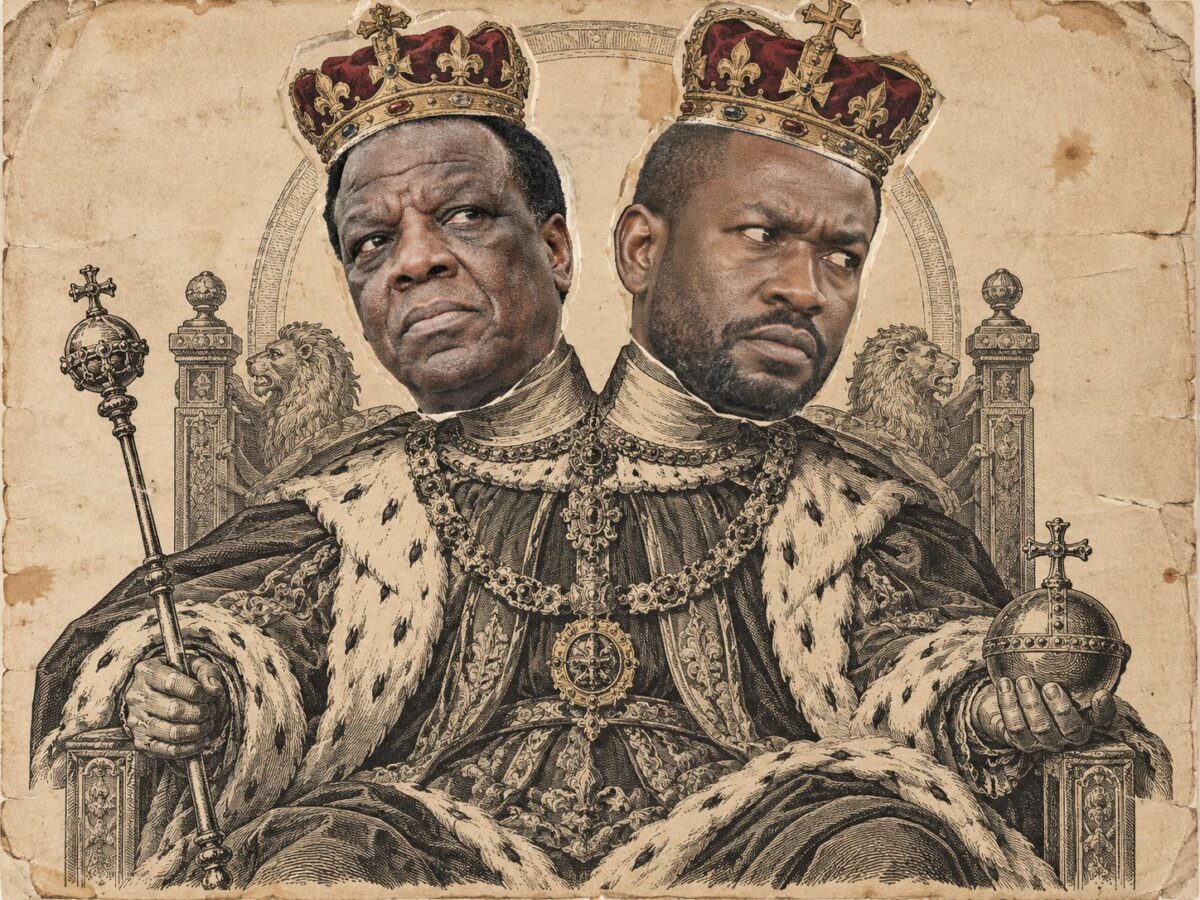
What we are witnessing in the present convulsions of the Orange Democratic Movement, and in the dramatic ascent of one Edwin Watenya Sifuna, is nothing less than the fulfilment of this ancient principle. We are witnessing the revenge of the ghost of Michael Kijana Wamalwa.
Let us retrace the genealogy of this affair.
When Jaramogi Oginga Odinga departed this world in January 1994, he left, among other things, a political party- Ford Kenya and a clear indication of who should inherit its leadership. That man was Michael Kijana Wamalwa, the affable Bukusu lawyer from Kitale who had served as vice-chairman. The arrangement was a political bequest to the AbaLuhya nation: the Luo patriarch was transferring the baton of opposition leadership to the western highlands, acknowledging that the struggle against authoritarian consolidation required a broader ethnic architecture than any single community could provide.
But Jaramogi also had a biological son. And that son, Raila Amolo Odinga, was not inclined to honour the terms of his father’s last political will. At the famous Wikondiek meeting in Kisumu, the Luo MPs voted overwhelmingly for James Orengo as Ford Kenya vice-chairman rather than for Raila. Raila stormed out, formed the National Development Party by 1996, swept Luo Nyanza clean, and left those who had sided with Wamalwa gasping for air. The consequence was devastating. The window for Luhya political cohesion that brief, luminous moment when the community might have achieved the kind of internal solidarity the Kikuyu accomplished under Kenyatta and the Kalenjin under Moi slammed shut. It has remained shut for three decades.
Until now.
The death of Raila Odinga on 15 October 2025 has accomplished what no living politician could: it has reopened the succession question that Raila himself foreclosed in 1994.
And here is the supreme irony. Unlike Jaramogi, who bequeathed a clear line of succession, Raila departed without designating an heir apparent. He left an empire but no emperor. His biological children — Winnie, Rosemary, Raila Junior desire a say in which direction the party should travel, but they are not seeking the mantle. They wish to be kingmakers, not kings.
It is into this vacuum that Sifuna has stepped.
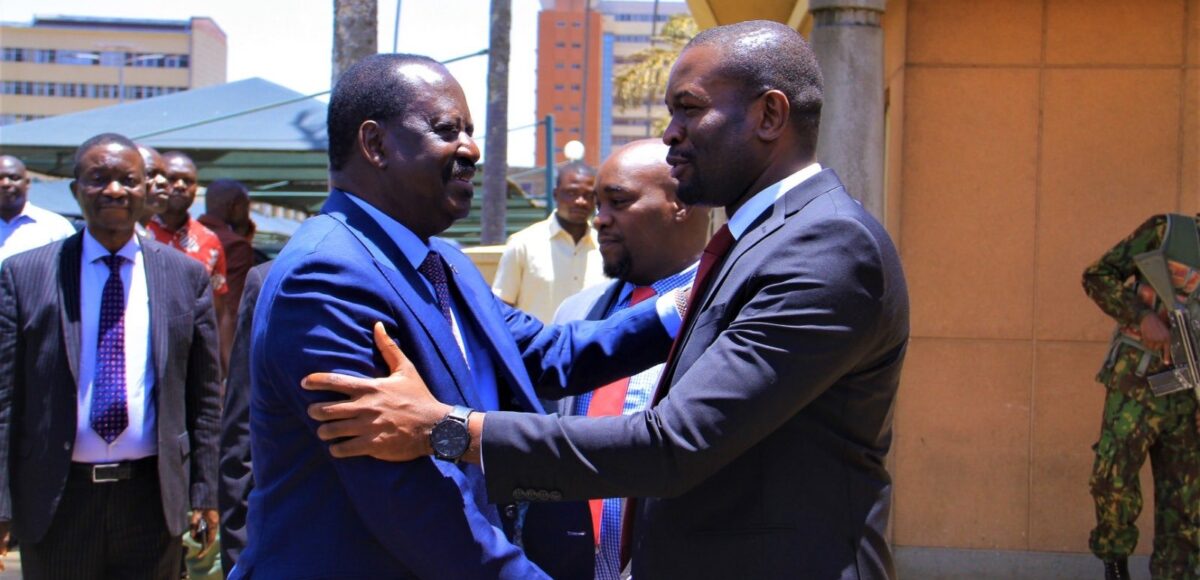
Consider the cast at the Sarova Panafric Hotel on 12 February, when Sifuna held his defiant press conference following his purported ouster by a NEC meeting in Mombasa. Beside him stood Winnie Odinga, in open defiance of her uncle Oburu. Beside him stood James Orengo — the Siaya Governor who, three decades earlier, had sided with Wamalwa at the Wikondiek meeting and paid dearly for it. When Orengo declared at Cyrus Jirongo’s burial in December that a Luhya must always be at the table when Kenya is being discussed, he was not merely making a tactical calculation. He was closing a circle that began at Jaramogi’s graveside thirty-one years ago. On 21 February, at a Linda Mwananchi rally in Kakamega that drew thousands to Amalemba Grounds despite teargas and attempts by the authorities to prevent the gathering, Orengo went further still: he declared publicly that on matters of the party, he would henceforth take direction only from Edwin Sifuna. The Siaya Governor has effectively overseen the repatriation of the political mantle back to the Mulembe nation. His conscience, one imagines, is finally clear.
But let us not be carried away by the romance of historical symmetry, for history operates on its own schedule, indifferent to the ambitions of individual actors. It is not yet Sifuna’s hour of power. It is his hour of formation.
What Sifuna is experiencing is not coronation but crucible. The attempted ouster blocked for now by the Political Parties Disputes Tribunal, with the matter returning on 26 February. The teargassing of his Linda Mwananchi rallies in Kitengela and Kakamega. The killing of twenty-eight-year-old Vincent Ayomo by police gunfire at Kitengela on 15 February a young mechanic and father shot through the eye while returning from work. John Mbadi’s gleeful celebration of his removal. These are not the trials of a man ascending to power but the trials of a man being forged for the possibility of power. There is a difference, and it is not trivial.
Sifuna’s immediate task is the consolidation of two critical constituencies. The first is the Luhya nation itself. Western Kenya’s political fragmentation with Mudavadi in government, Wetang’ula as Speaker, Wamalwa leading DAP-Kenya, and various governors pulling in different directions means the Luhya vote remains a shattered mirror. The Kakamega crowds who turned out for him even as their governor initially tried to block the rally represent the grassroots fracture lines he must navigate. The second constituency is generational: the millennials and Generation Z who constitute over seventy-five per cent of Kenya’s population. The “Sisi Ndio Sifuna” slogan that erupted after his ouster is not merely catchy; it is an identification a digitally fluent, economically frustrated generation recognising in this forty-three-year-old senator a vessel for its aspirations.
These two constituencies — ethnic and generational will make him or break him. But even if he achieves their consolidation, the velocity of his rise will be tempered by a force far more formidable than party constitutions or police teargas: elite consensus. Kenyan presidential politics has never been determined by popular mandate alone. It is determined by the negotiated agreement of the country’s power brokers -the tribal patriarchs, the business cartels, the security establishment, the international interests that maintain Kenya as a strategic asset in the Horn of Africa. Sifuna may win the streets, but the streets do not determine who enters State House.
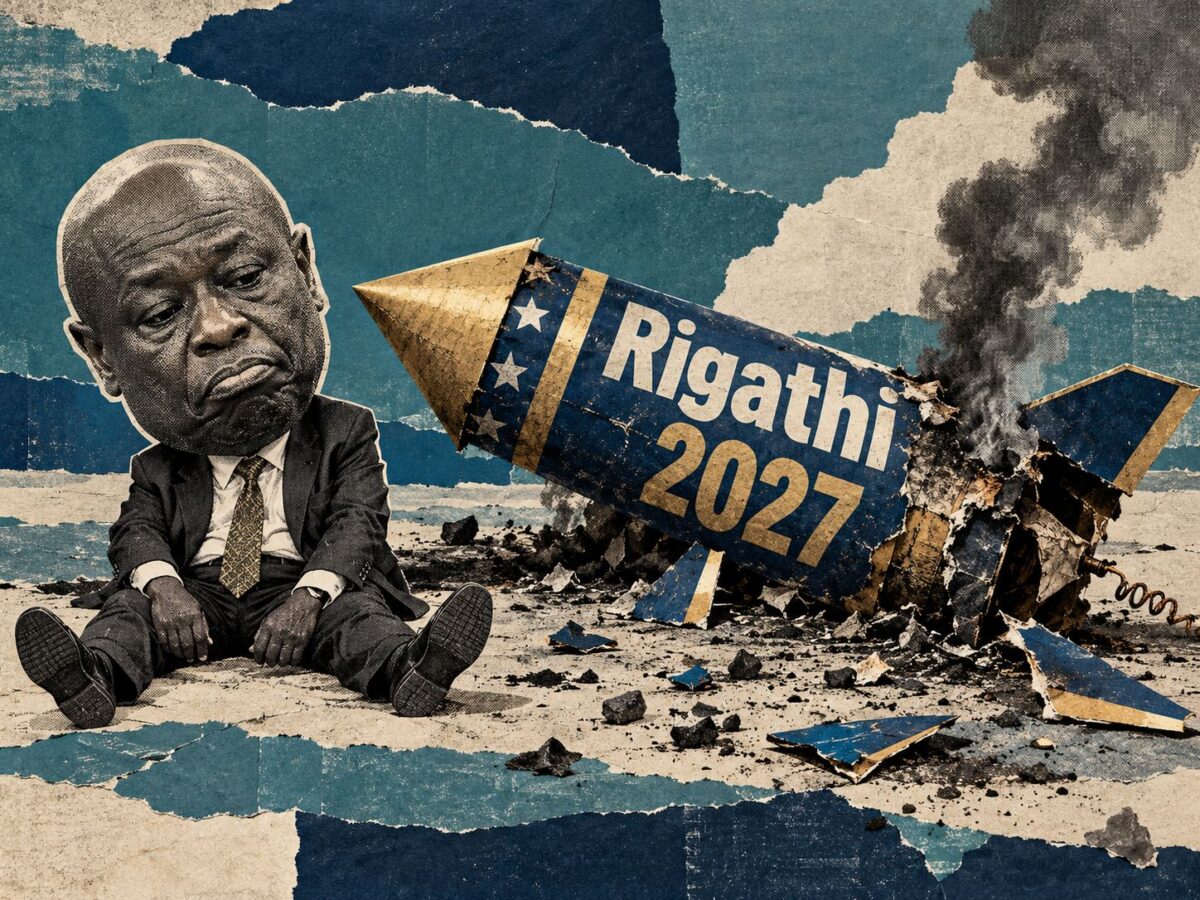
And here we arrive at the most uncomfortable truth. Even as Sifuna curates his politics positioning himself as the voice of the downtrodden and the critic of an expensive government he also functions, whether he knows it or not, as a pawn for other elites seated at the same table. The United Opposition coalition of Kalonzo Musyoka, Rigathi Gachagua, and Eugene Wamalwa is wooing him not out of affection for his principles but because his popular base is useful to their presidential arithmetic. Uhuru Kenyatta’s Jubilee machinery has its own calculations. Sifuna is, in this sense, simultaneously a principal and an instrument. The question is whether he possesses the strategic intelligence to recognise when he is being used and the tactical skill to extract maximum value without being consumed.
The ghost of Wamalwa has reclaimed the mantle. But Wamalwa himself, we must remember, never became president. He became vice-president a powerful position, certainly, but one that depended entirely on the goodwill of the man who occupied the chair at the head of the table. The mantle, it turns out, comes with a warning label.
Sifuna would do well to read it.

No comments
Sorry, the comment form is closed at this time.