





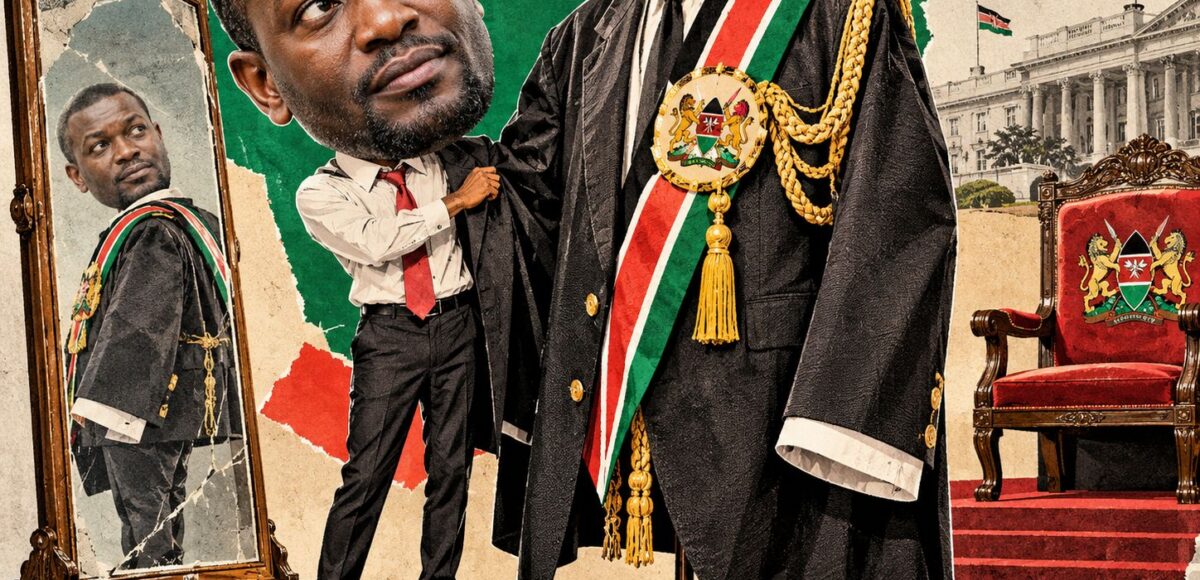
But presidential politics is a different game. Sifuna is still serving his first elected term as Nairobi Senator, having won the seat in 2022. His first serious electoral attempt came in the 2017 Nairobi Senate race, which he lost before returning to win in 2022. That raises an uncomfortable question: has he cooked long enough?
Presidents are made, not merely announced. Kenyan political history offers an important lesson. Jomo Kenyatta spent decades building political authority. Daniel Arap Moi spent years inside government before becoming president. Mwai Kibaki spent decades in national politics. Uhuru Kenyatta moved through Parliament, and Cabinet before taking State House.
Even President Ruto’s journey was not overnight. He entered Parliament in 1997 and spent more than two decades accumulating experience, networks, alliances and political machinery before winning the presidency in 2022.
The presidency is therefore less about having the loudest rally and more about having the deepest political infrastructure. Rallies are not votes, and this may be Sifuna’s biggest vulnerability. A large crowd demonstrates enthusiasm. It does not necessarily demonstrate a national voting coalition.
Kenya’s presidential election requires a candidate to win more than half of the national vote and at least 25 per cent of the vote in 24 counties. That means a presidential candidate needs more than urban excitement or viral speeches. They need geographic breadth, organization and reliable votes across the country.
There is another problem. Sifuna’s critics can reasonably ask: What exactly would a Sifuna presidency change? His public agenda has been the Rule of Law and Constitutionalism. But the Rule of Law is not a governing programme. A presidential candidate needs to explain how they will finance government, create jobs, reform institutions, manage the economy, deal with debt, improve security and deliver services.
The Kenyan voter may eventually ask a much simpler question: “Apart from defeating Ruto, what exactly are you going to do?” and that could become the defining test of Sifuna’s candidacy.
The experience gap cannot be ignored. Sifuna has communication skills. President Ruto has presidential experience. Sifuna has political momentum. The President has an established national machine. Sifuna has a growing movement. President Ruto has spent decades building relationships across Kenya’s political and administrative landscape. This is the difference between political popularity and political power. And elections are ultimately decided by the latter.
The danger of premature presidentialism.
There is a phenomenon in politics where a politician becomes nationally famous before becoming nationally organized. That can create the illusion of inevitability. The crowds get bigger. The social-media numbers rise. The speeches become more presidential. And suddenly the politician begins campaigning against an opponent who has already spent years building the machinery required to defeat them. That is the danger Sifuna faces. He may be ahead in visibility but behind in infrastructure.
Can he defeat President Ruto in 2027? The presidency is a very different game from winning a Senate seat, commanding rallies or becoming the loudest voice in opposition. For Edwin Sifuna, the 2027 question is no longer whether he can attract attention. It is whether he can turn that attention into a national electoral machine capable of defeating an incumbent. On the evidence available today, the answer is probably not. For now, Sifuna has the noise. He has the momentum. He has the ambition. But against an incumbent, he probably does not yet have the numbers.
[/vc_column_text][/vc_column][/vc_row]

No comments