





By Patrick Iraki
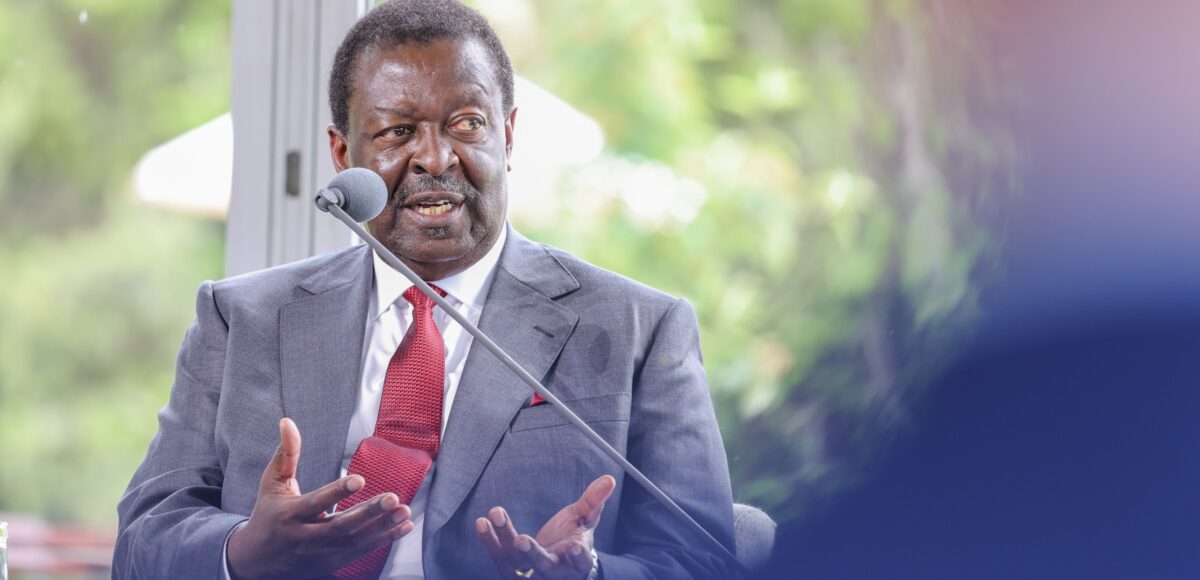
There is a cruel arithmetic at the heart of Luhya politics, one that has repeated itself with the relentless precision of a Greek tragedy for the better part of six decades. The community is Kenya’s second-largest ethnic group, sprawling across Kakamega, Bungoma, Vihiga, Busia, and parts of Trans Nzoia. It is numerically formidable, but perpetually ungoverned. It has produced vice presidents and deputy prime ministers, finance ministers and speakers. It has never produced a president. And in that gap between what the numbers promise and what the politics delivers lies the entire story of Wycliffe Musalia Mudavadi.
He arrived in politics not by ambition but by inheritance. After the death of his father Moses Mudavadi in 1989, Musalia entered Sabatia constituency through a by-election, the son stepping into the father’s shoes as sons in dynastic African politics invariably do. It was a beginning that would, in hindsight, define everything that followed. Mudavadi has spent thirty-five years in public life threading the needle between capability and caution, between immense political potential and the studied reluctance to fully spend it.
His resume is, by any measure, extraordinary. He served as Kenya’s seventh Vice President under Daniel arap Moi in 2002, as Deputy Prime Minister between 2008 and 2013, and has held Cabinet portfolios spanning Finance, Agriculture, Foreign Affairs, Transport, and Local Government. As Finance Minister at the age of thirty-three, he did something almost no Kenyan politician of his era managed — he liberalized the economy with unseen zeal, floating the shilling, scrapping import licenses, abolishing price controls, and reducing inflation from a punishing fifty per cent to a single digit. The man clearly has the mind for governance. What has always eluded him is the hunger for power.
His nickname in political circles is “Earthquake.” It is, in retrospect, the most ironic sobriquet in Kenyan political history. An earthquake reshapes the landscape it touches, irreversibly, violently, without apology. Mudavadi has spent the better part of his career carefully not reshaping anything.
In 2012, when he finally broke from Raila Odinga to contest the presidency on his own terms, the movement he announced, with language suffused with destiny, was immediately absorbed into Uhuru Kenyatta’s coalition, the earthquake reduced to a tremor. In 2022, his dramatic “earthquake moment” declaration at the Kasarani rally, promising seismic political independence, lasted barely a week before he was folded into William Ruto’s Kenya Kwanza as Prime Cabinet Secretary. He then dissolved his own Amani National Congress into Ruto’s UDA without, critics charge, so much as consulting his own supporters.
This is the central paradox of Musalia Mudavadi. He is, without question, the most credentialed Luhya politician of his generation. He is also, in the community’s own restless reckoning, the leader who keeps arriving at the threshold of history and declining to enter.
The dream of a unified Luhya bloc has flickered and flared for decades, from the era of Masinde Muliro through to Kijana Wamalwa, yet remains tantalizingly out of reach. Muliro was the original architect of this dream, a combative Bukusu from Kimilili who co-founded KADU at independence and fought for a Kenya where smaller communities would not be swallowed whole by the centralizing ambitions of the larger ones. Political analysts have argued that had Masinde Muliro not died in 1992, FORD would have remained united and might well have removed Daniel arap Moi that same year. He was, in death, exactly the kind of figure the Luhya have been searching for ever since, someone who put the community’s dignity above personal accommodation.
Kijana Wamalwa came closest to inheriting that mantle. He had the voice, the charisma, and the cross-tribal affection that transcends ethnic arithmetic. But death intervened in August 2003, only ten months into his vice presidency, before the promise could be fulfilled.
Since then, Western Kenya has been waiting. And into that waiting has stepped, with increasing audacity, one George Natembeya.
The Trans Nzoia governor is everything Mudavadi is not, and he understands this with the clarity of a man who has studied his opponent’s weaknesses. He has publicly dismissed Mudavadi and Wetang’ula, saying the community cannot follow leaders who have never sacrificed anything for anybody, and claiming that Western Kenya has no political head who can negotiate on its behalf — unlike Nyanza, which had Raila, or the Rift Valley, which has Ruto. It is a devastating indictment, not least because it contains an uncomfortable measure of truth.
In a daring move, Natembeya convened a rally at Mudete in Sabatia, the very hometown of Musalia Mudavadi, where elders from the four sub-tribes of Vihiga endorsed him as the Western region’s spokesperson, a position Mudavadi lays formal claim to. The symbolism was deliberate and stinging. It was the political equivalent of erecting your banner in your rival’s front yard. He then paid homage to King Nabongo Mumia II at the Shiembekho Shrine in Matungu, seeking the blessing of the Wanga royal lineage — anchoring his claim not in party machinery or government appointments, but in cultural legitimacy.
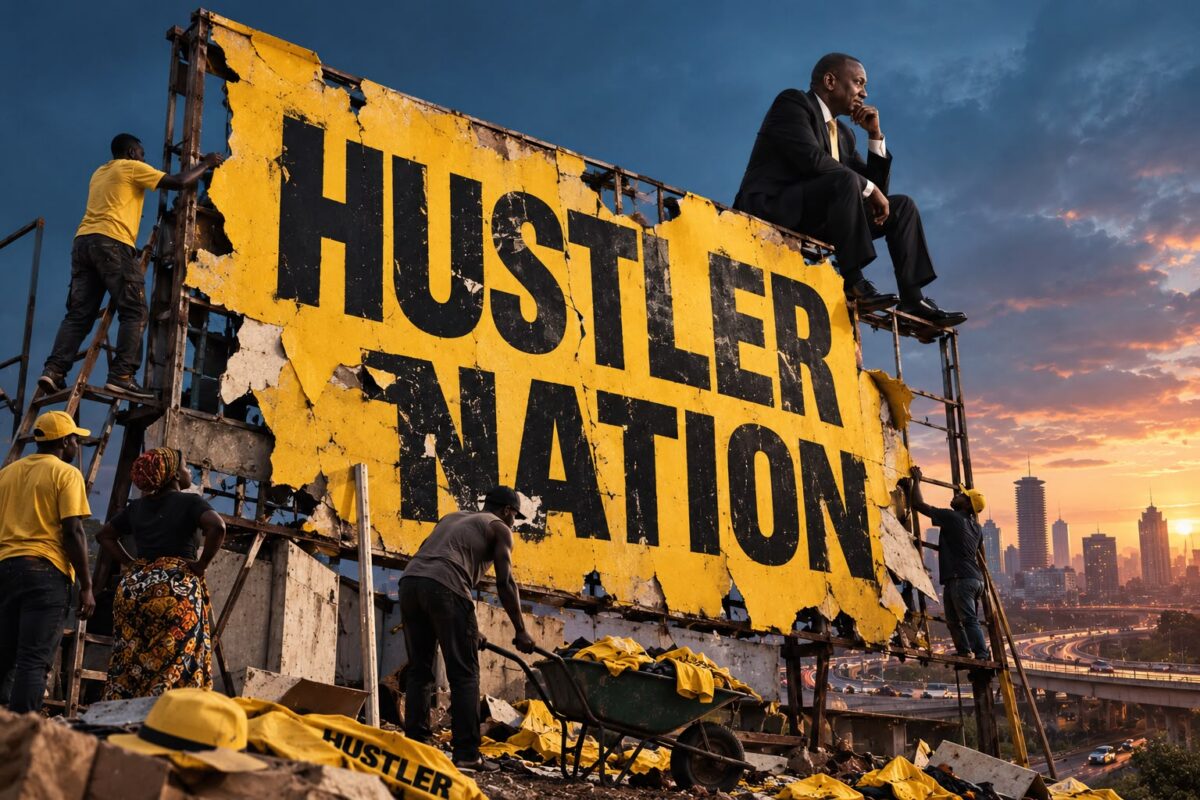
Pollsters have since rated Natembeya the most influential Luhya leader, placing him ahead of the seasoned politicians of the region. His Tawe Movement — the word means “No” in Luhya — has become the vehicle of a community’s accumulated frustration with leaders who, as the movement’s supporters charge, have traded Western Kenya’s votes for personal ministries and comfortable titles.
Mudavadi’s response has been telling. He issued public warnings that Natembeya would be removed from the Trans Nzoia governorship in 2027, saying: “We are coming for you.” It is the language of a man who feels the ground shifting beneath him, and who has reached for the instruments of incumbency rather than the tools of genuine popular authority.
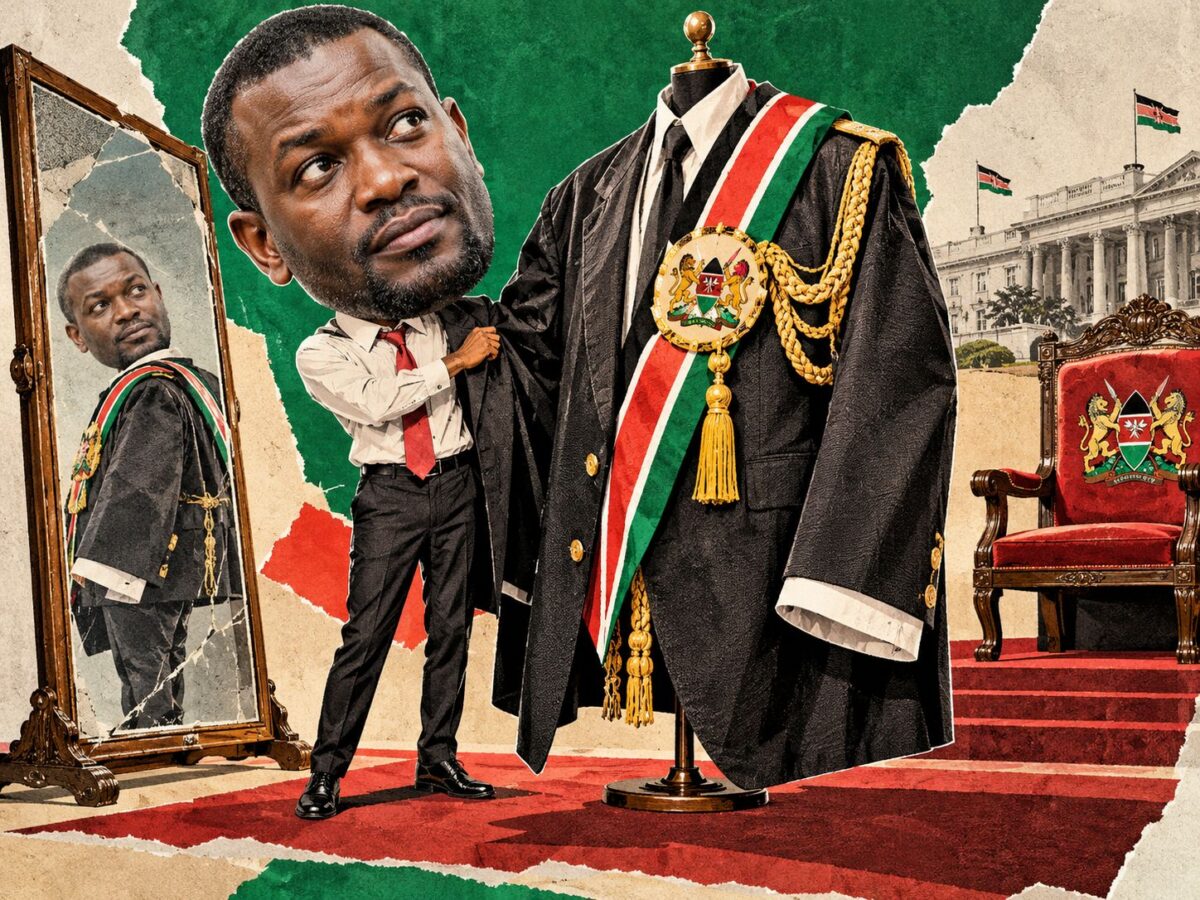
Here is where the historical echo becomes impossible to ignore. Mudavadi’s position in 2027 is structurally analogous not to Kijana Wamalwa, whose authority was earned and organic, but to Moody Awori, the government’s preferred Luhya steward, installed into proximity with power, but unable to convert the title into community ownership. Like Awori before him, Mudavadi holds the highest Luhya office in the current administration. Like Awori, he is being challenged not by an external political force but by a figure rising from within the community itself, one who speaks the language of liberation rather than accommodation. And like Awori, whose Funyula seat was eventually claimed by Paul Otuoma, Mudavadi’s home base in Vihiga is no longer the fortress it once was.
The difference, and it matters, is that Mudavadi is not politically spent. He is 64, experienced, and possessed of a strategic intelligence that his opponents consistently underestimate. His technocratic track record as Prime Cabinet Secretary, overseeing Foreign Affairs with quiet competence, has shored up his national credibility even as his regional authority has eroded. And history occasionally rewards the patient man.
But patience alone will not hold Western Kenya. As Natembeya himself has put it, the community’s quest for the presidency is 2027, not any other time, warning that if the moment is missed, it should simply be forgotten. It is the rhetoric of urgency, and it is gaining traction precisely because it names what Mudavadi’s politics of moderation refuses to name: that after sixty years of vice presidencies and deputy prime ministerships, Western Kenya has been perpetually accommodated but never truly empowered.
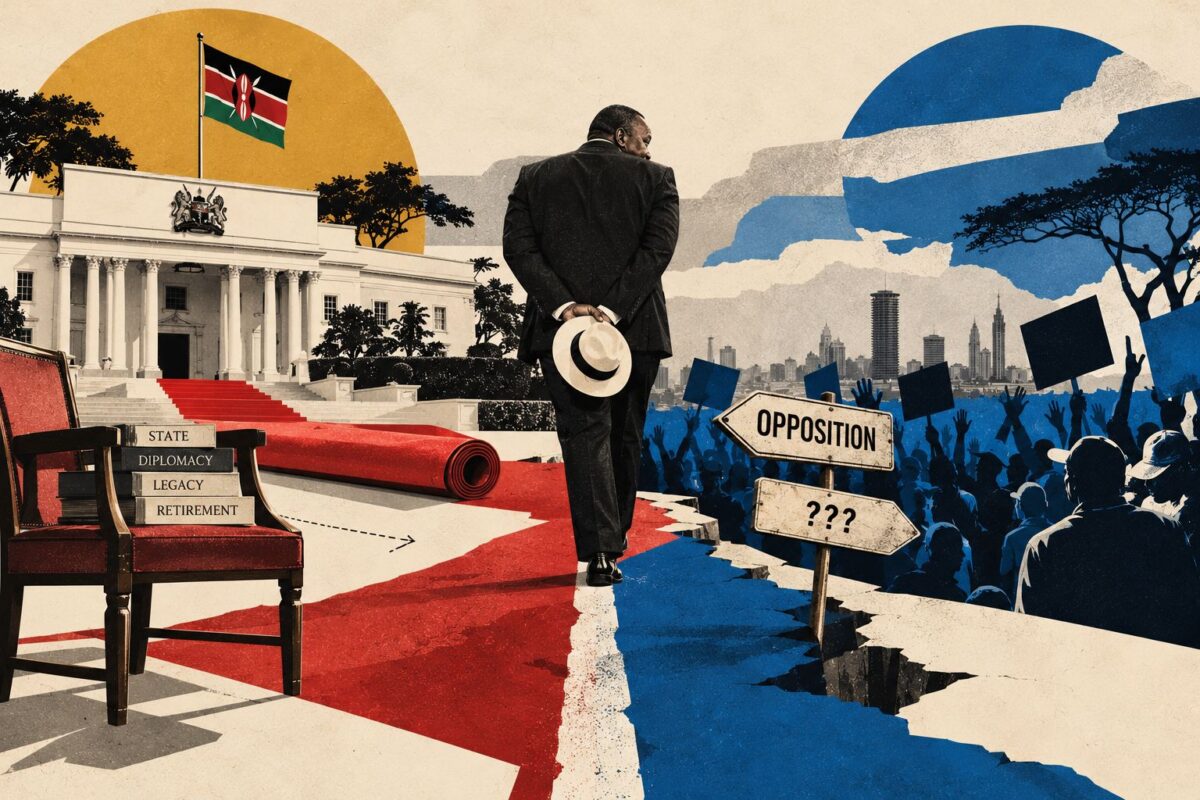
What, then, awaits Mudavadi beyond 2027? If Ruto is re-elected and Mudavadi delivers the region, an increasingly uncertain proposition, he inherits the twilight role that every loyal deputy has occupied: respected, decorated, and quietly set aside. If Ruto loses and the region fractures, Mudavadi will bear a good portion of the blame.
There is, however, a third possibility, the one that Mudavadi’s long career of strategic survival suggests he is quietly calculating. In 2032, when Ruto’s constitutionally mandated final term ends, the field will be open. The community that has been told for so long that its time is always the next election will be told so again. Whether that candidate is Mudavadi, or Natembeya, or someone neither man has yet anticipated, depends entirely on what Western Kenya decides it is: a kingmaker perpetually renting its votes, or a king finally ready to be made.
The earthquake has been promised too many times. The ground, for the first time in a generation, feels genuinely ready to move. Whether Mudavadi is the force that moves it, or the old order it moves against, is the question 2027 will answer, loudly, and without mercy.

No comments
Sorry, the comment form is closed at this time.