





By Patrick Iraki
History, as Kenya’s politicians have repeatedly refused to learn, whispers not. It shouts. And if you listen carefully enough, the story of Deputy President Kithure Kindiki- the soft-spoken law professor from Tharaka Nithi who now occupies the country’s second-highest office- sounds unsettlingly familiar. We have been here before. The names were different, the era was different, but the architecture of political miscalculation was the same.
Cast your mind back to September 2003. President Mwai Kibaki, still recovering from the blood clots that had ravaged his body after the near-fatal road accident, sat at State House nursing two kinds of grief, the personal loss of his closest political friend, Michael Kijana Wamalwa, and the gathering storm of a coalition threatening to consume his young government. Wamalwa’s death had given Kibaki a breathing space, a temporary ceasefire in the infighting over power-sharing as the warring factions of NARC became united in grief. But the ceasefire was never going to last. Kibaki needed a new deputy. More urgently, he needed a political fix.
After Wamalwa’s death, it was only prudent for Kibaki to appoint someone from the same Luhya community in order to keep the large Western Province vote bloc within NARC – a region that had given the coalition 22 out of 24 parliamentary seats in the previous election. The man he settled on was Moody Awori, a Samia elder from Funyula, a Mang’u High School classmate, and at the time, the oldest Member of Parliament in the country. Political analysts immediately saw the appointment as a stop-gap measure. At 76, Awori was four years older than the president himself, clearly an unlikely successor by any arithmetic.
What Kibaki was actually attempting was a form of political alchemy: the manufacture of a Luhya kingpin from the raw material of an affable elder who happened to hold the right title. It did not work. The Luhya are not a monolith, and they have never allowed Nairobi to choose their champions for them. Wamalwa had earned his authority through decades of grassroots struggle, a famous voice that could silence stadiums, and an authenticity that no presidential decree could replicate or transfer. Among ODM circles, Awori was branded a traitor, and in the elections that followed, the party sought his downfall, fielding Dr Paul Otuoma, who successfully ousted Awori, pushing him out of politics altogether. His unwavering alliance with his old school friend Kibaki had cost him dearly. Western Kenya, rather than rallying behind the man in the Vice President’s office, gravitated toward Raila Odinga, the opposition figure who had offered them a different kind of belonging.
Now look at Kithure Kindiki
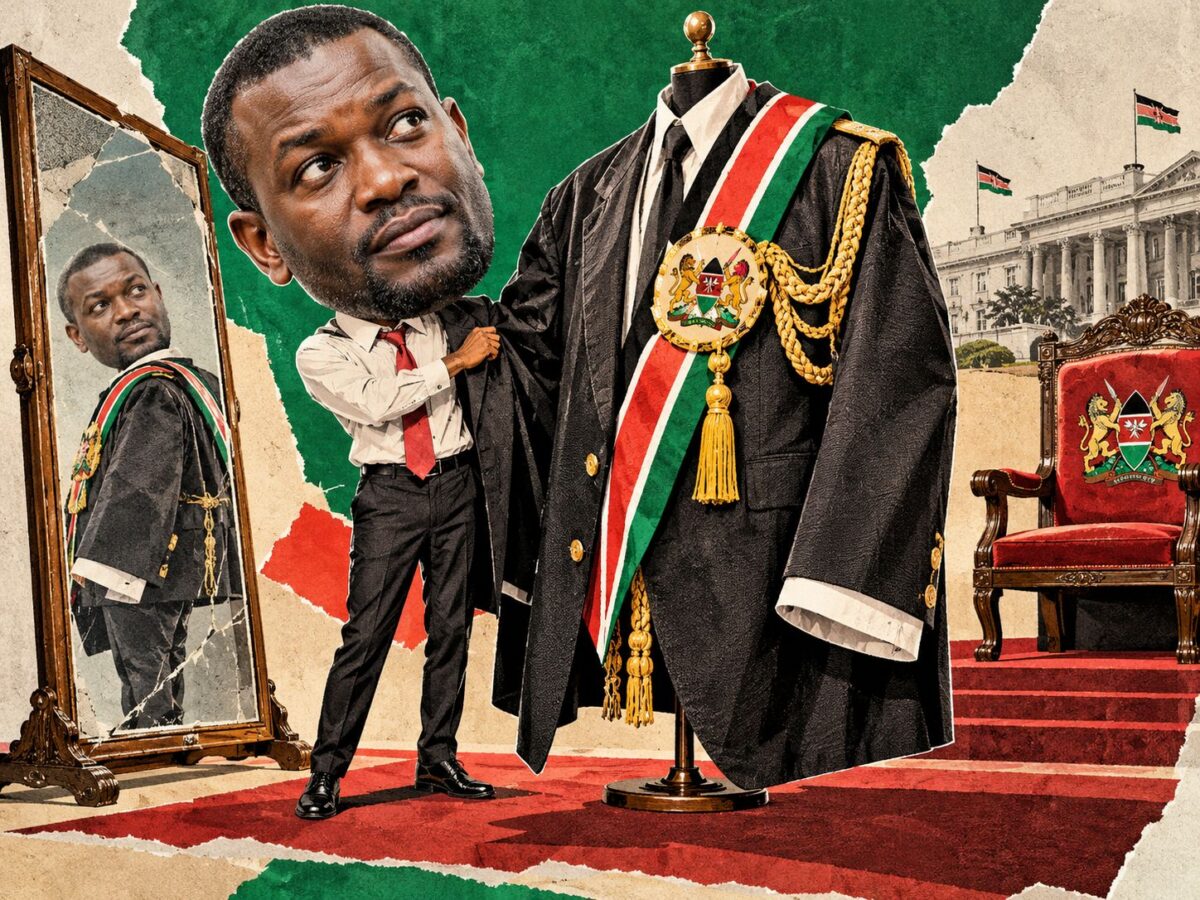
Appointed by President William Ruto in October 2024 to replace impeached Deputy President Rigathi Gachagua, Kindiki’s role was intended to consolidate control over the Mt Kenya voting bloc, a region that had delivered majority of its votes to Ruto in 2022. The logic was straightforward: if GEMA had been rattled by Gachagua’s removal, install another GEMA son and restore calm. The political cartography of Nairobi’s power brokers made it look elegant on paper. It is considerably less elegant on the ground.
The problem is structural, and it is the same problem that sank Awori twenty years ago. The appointment of Kindiki from the numerically inferior Tharaka Nithi in place of Gachagua has only reaffirmed the Gikuyu as the fulcrum of GEMA, and critics argue that the main role Embu and Meru have historically played within the association has been to act as supporting cast for their Gikuyu cousins. Kindiki is, in the eyes of many Mt Kenya voters, not the mountain’s son – he is the mountain’s compromise.
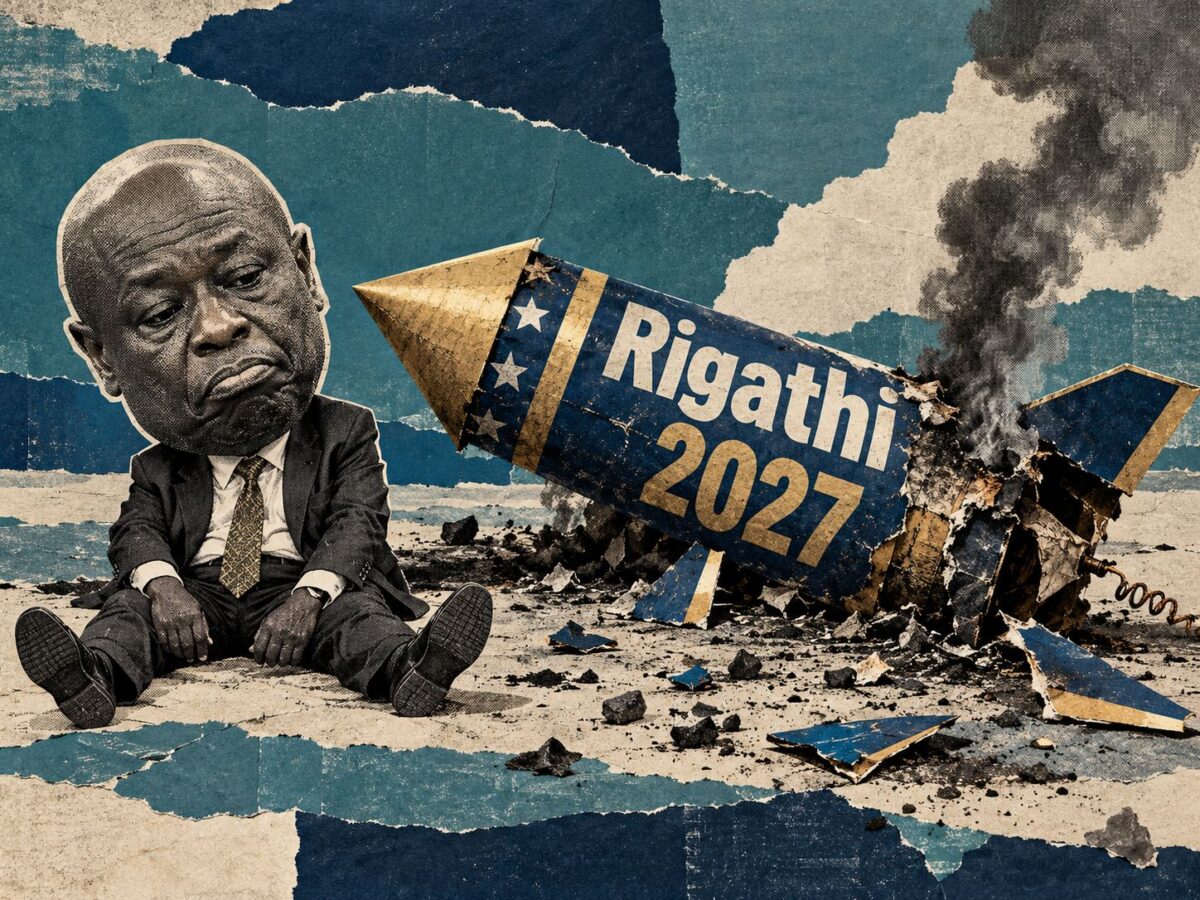
And Gachagua, unlike Kijana Wamalwa, is not dead. He is very much alive, very much angry, and very deliberately occupying the political vacuum that Kindiki’s technocratic temperament has struggled to fill. Kindiki’s silence has become politically costly. His absence from overt political mobilisation has created a vacuum that Gachagua is eagerly filling, moving through funerals, church fundraisers, and whistle-stop meetings, radicalising ethnic sentiment and positioning himself as the region’s authentic voice.
Awori faced Raila. Kindiki faces Gachagua. The geometry differs, Raila was an opposition titan drawing Luhya votes outward from government, while Gachagua is an internal insurgent radicalizing Mt Kenya from within. But the underlying dynamic is the same: a deputy president appointed to hold a community cannot hold it if that community does not recognise him as its own.
Hailing from the Tharaka, with a population of approximately 393,177, and riding against the wave of anti-government populism, Kindiki’s role as kingmaker for Ruto in 2027 will be a steep climb. The numbers simply do not confer the authority the title implies. Awori’s Samia constituency in Funyula could not deliver the Luhya bloc. Kindiki’s Tharaka constituency, however distinguished he is as a jurist and administrator, cannot in itself anchor a region of millions.
There is, however, one significant difference between the two men, and it may yet save Kindiki or damn him more thoroughly. Awori was beloved but politically inert. Kindiki is neither. He has taken a hard stance against Gachagua, vowing openly to edge him out of the Mt Kenya political arena, warning that once the Kenya Kwanza political machinery is fully activated, “those talking around will have nowhere to hide.” It is the language of a man who understands the threat, even if he has yet to fully neutralise it.
But warriors who tell their enemies when they will start fighting rarely carry the element of surprise.
The deeper lesson of Moody Awori is not simply that a presidency-assigned kingpin cannot hold a community. It is that communities grant authority – it cannot be installed from above like a transformer on a power line. Wamalwa earned Western Kenya’s loyalty through sacrifice and sweat. Gachagua, for all his turbulent tenure, earned Mt Kenya’s fierce protection the same way – by being seen to fight for the region, loudly and unapologetically, even when it made him enemies.
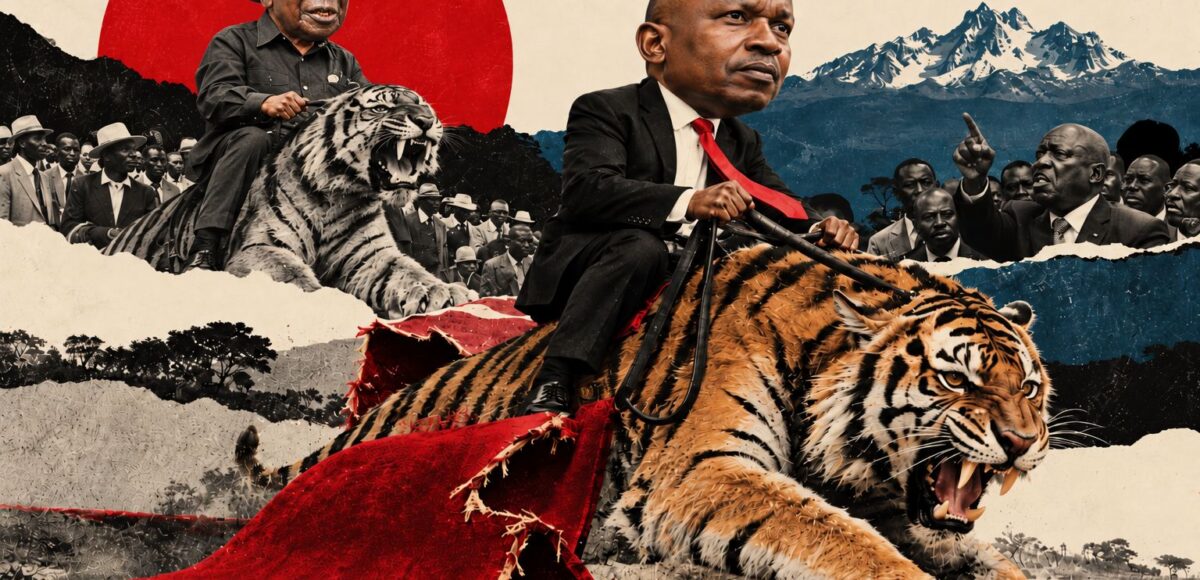
Kindiki has the office. He has the title. He even has the intelligence. What remains to be seen — and what 2027 will ruthlessly adjudicate — is whether he has the roots. If he does not, history already knows how this story ends. Moody Awori wrote the epilogue himself. He called his memoir Riding on a Tiger.
Kindiki is on the same animal. The question is whether he knows it.

No comments
Sorry, the comment form is closed at this time.